Global Steps, Lifelong Memories: Our Little Changemakers Explorers Conquer Beijing!
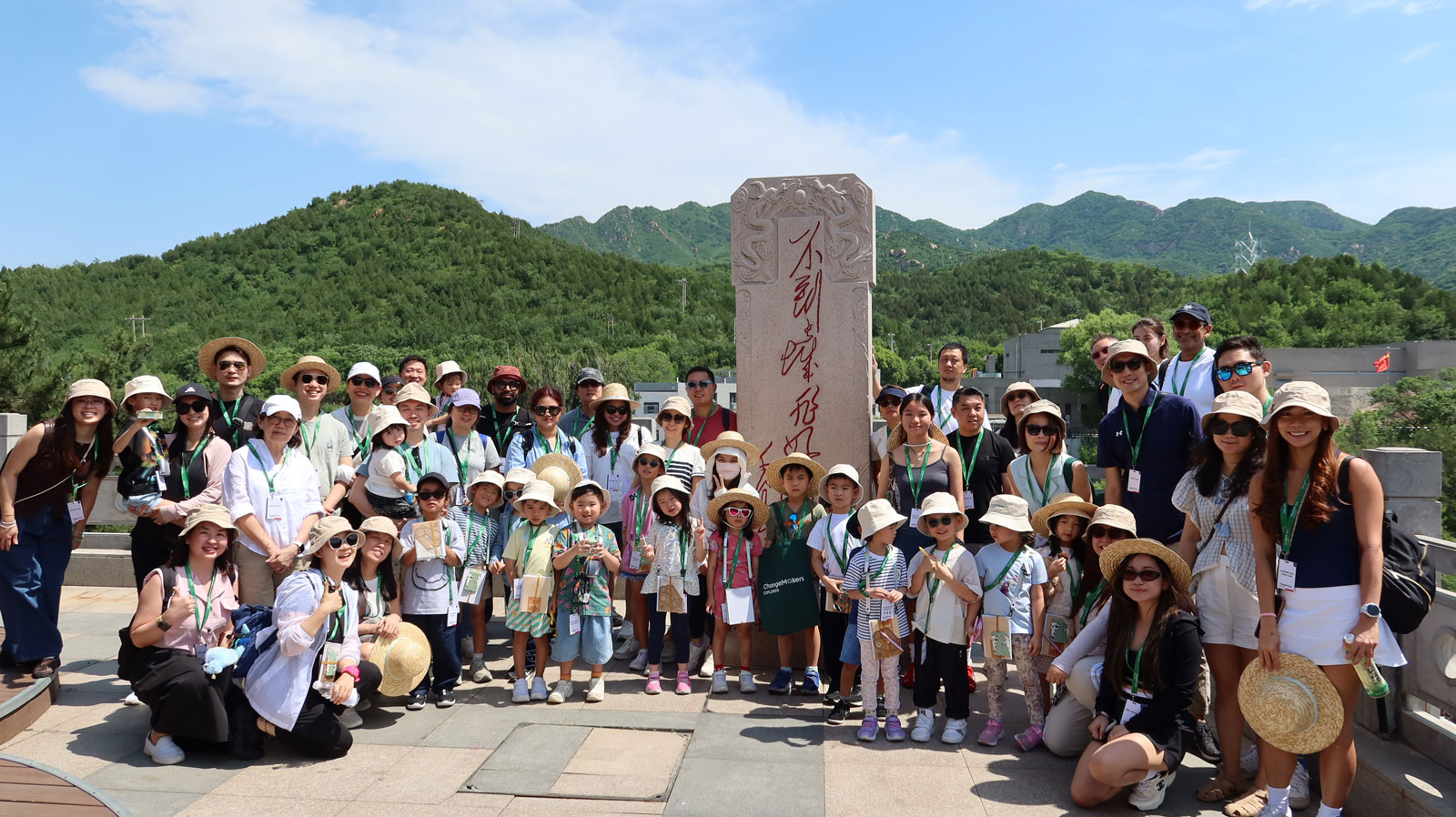
Our little Changemakers Explorers officially wrapped up an unforgettable, inaugural 9-day overseas immersion journey to Beijing! For these young adventurers, learning truly came alive through meaningful cultural exchanges, real-world exploration, and hands-on discovery.
From standing atop the majestic Great Wall of China to uncovering the rich history of Shichahai through a traditional guided rickshaw ride, the children constantly asked curious questions and made fascinating new observations about the world around them.
An Immersive Preschool Experience
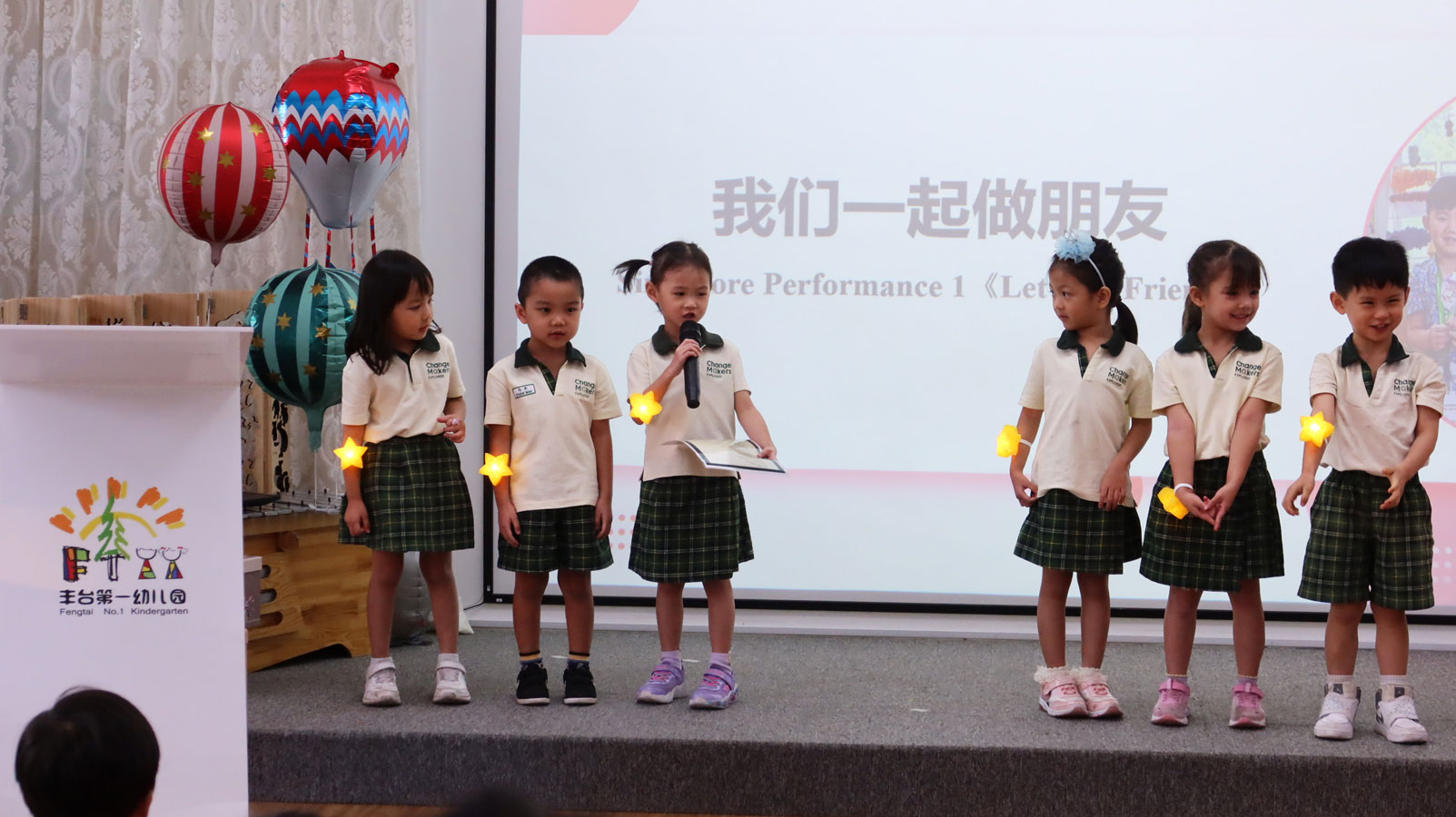
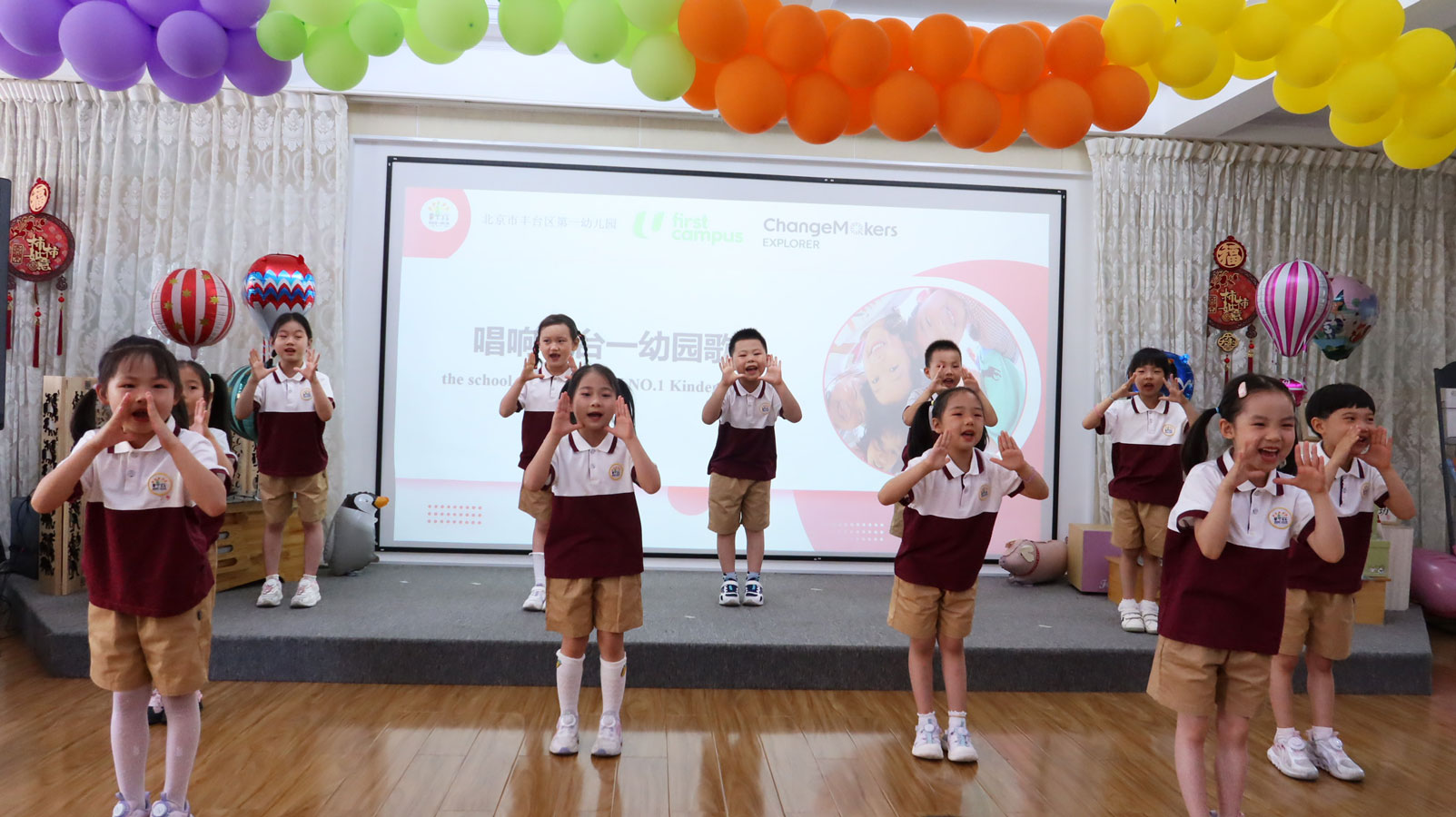
A cornerstone of this incredible journey was a 4.5-day immersion session at the renowned 丰台一幼 Fengtai First Kindergarten (东大街). Paired with local buddies, our children stepped directly into a pure Chinese-speaking environment, building unforgettable core memories through a blend of cutting-edge learning and rich cultural traditions:
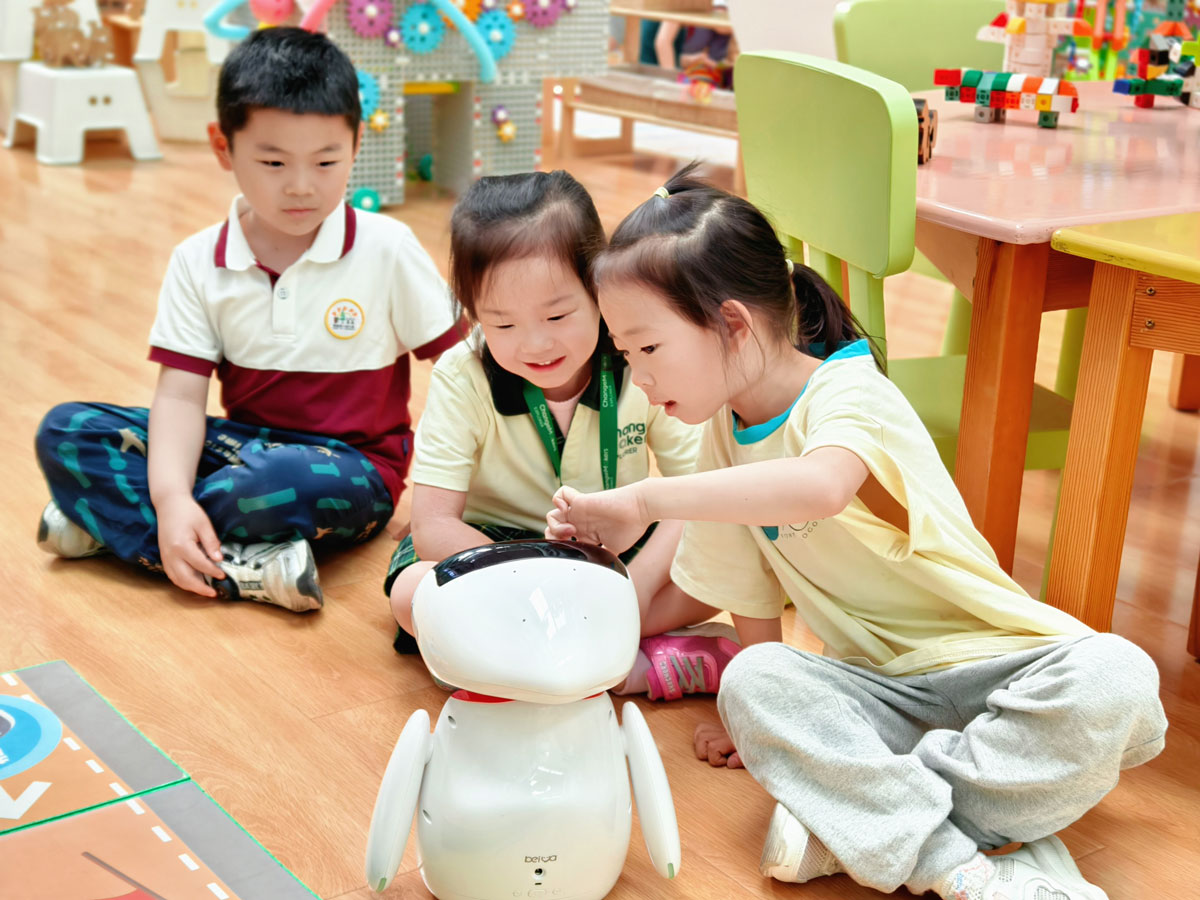
The children tackled fun, physical challenges by programming Xiaobei Robots. By sequencing actions and troubleshooting on the fly when the robot didn’t follow directions, they accelerated their logical reasoning and systematic problem-solving skills in a tangible way.
Inquiry-Based Learning with Tarata Toys
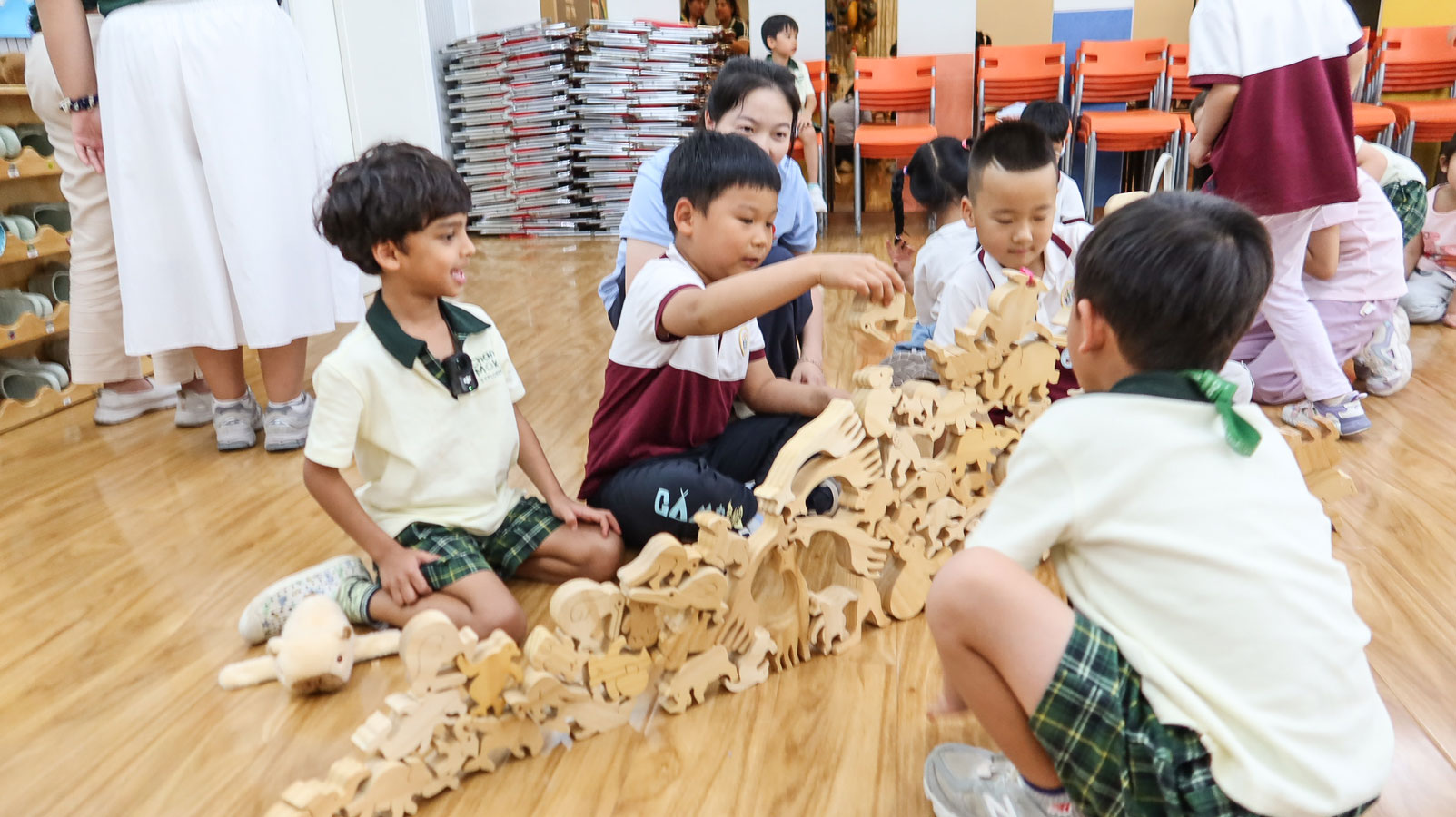
Our children engaged with award-winning, New Zealand-designed Tarata Toys together with their new friends. Through building towering masterworks, they explored scientific concepts like mechanics, balance, and arch structures, a tactile process that nurtured patience, deep focus, and coordination.
Traditional Folk Art & Zanhua
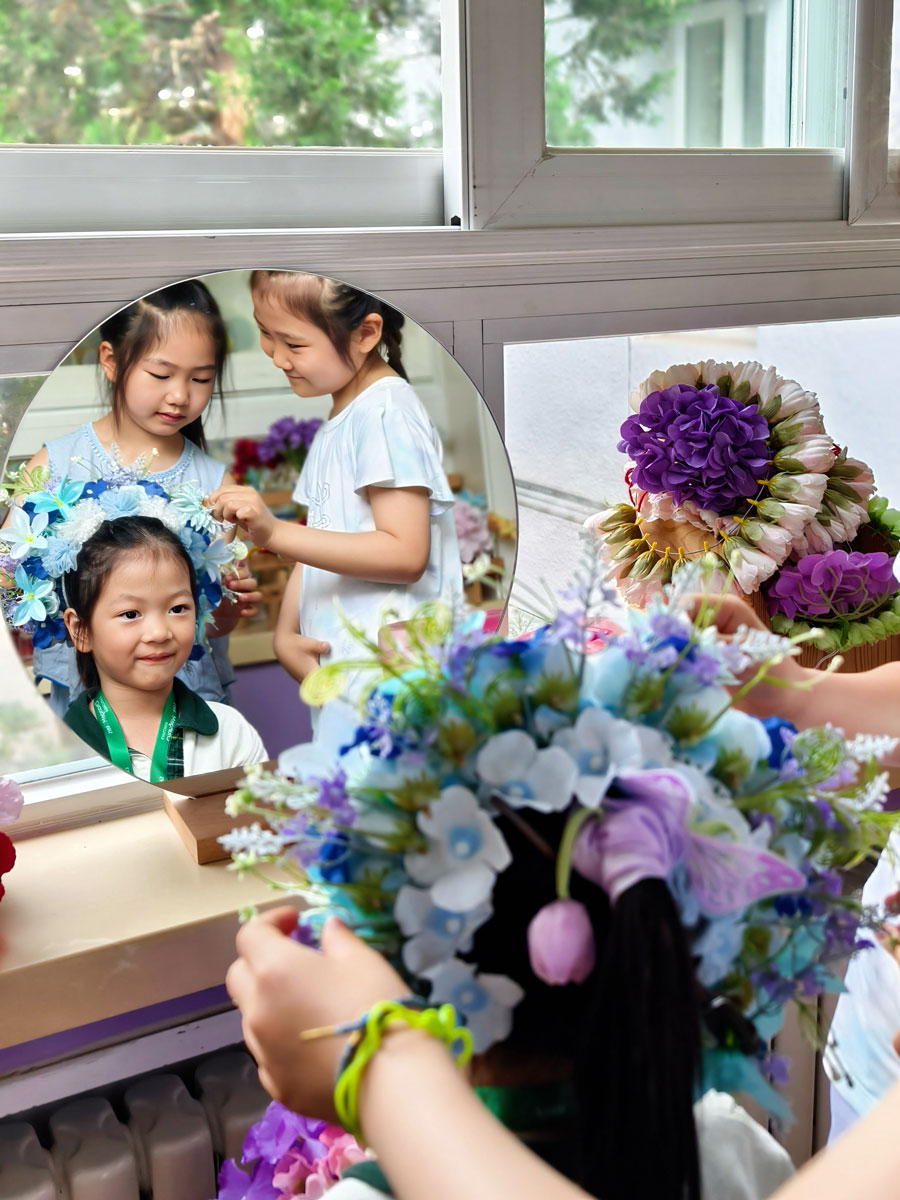
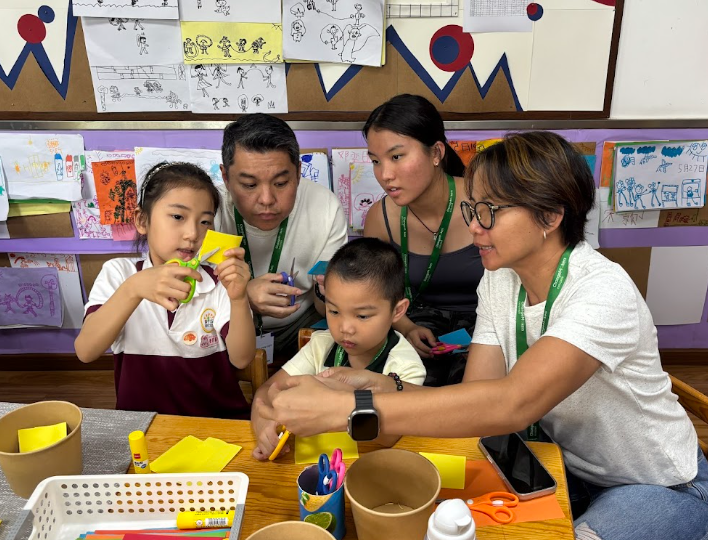
Cultural pride took center stage as the children mastered the folding and cutting techniques of traditional paper-cutting (剪纸). They also tried their hand at the intricate, beautiful art of zān huā (簪花 – flower pinning art).
Child-Initiated Outdoor Play
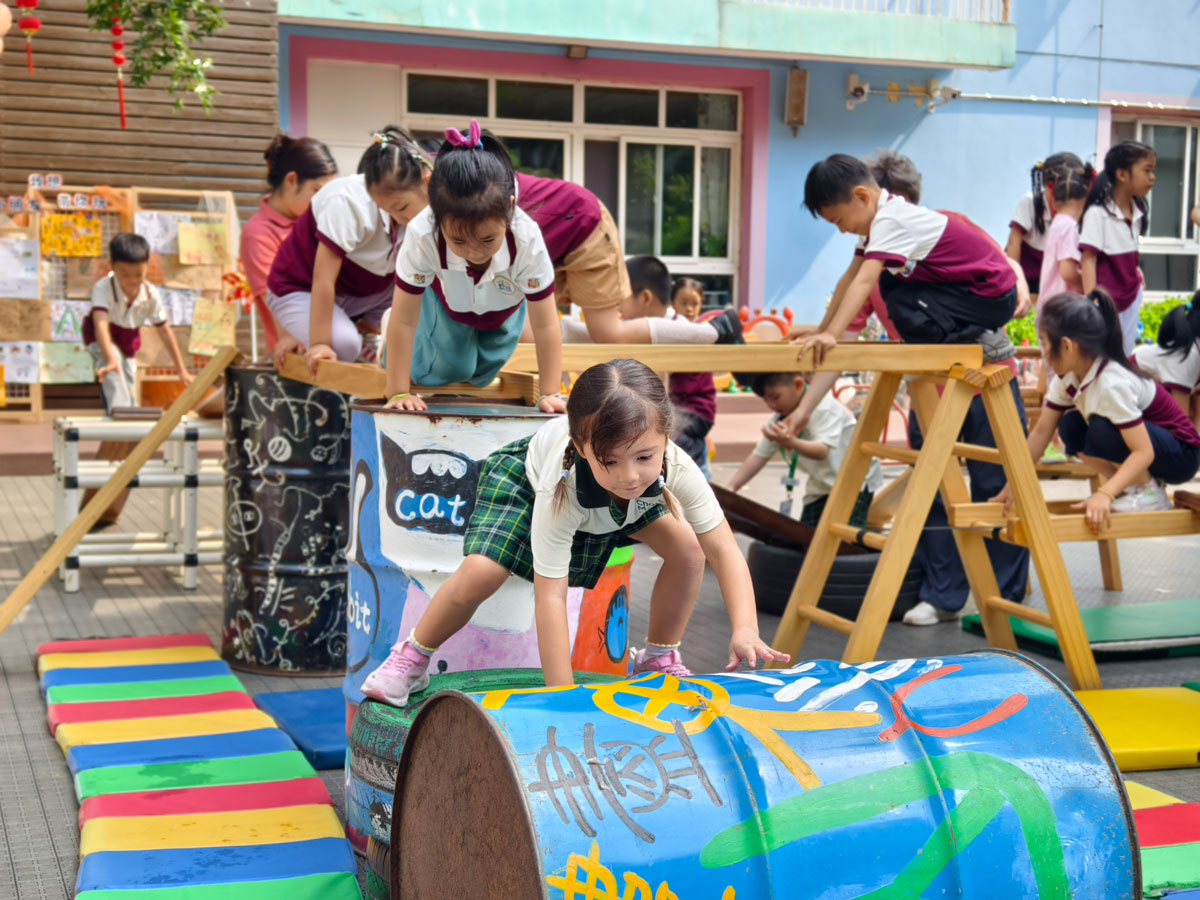
Joining local children in the vibrant outdoor environment, our little ones dived into active, self-directed play. This stimulating setting encouraged natural risk-taking, building physical dexterity.
These exchanges allowed the children to build real friendships, communicate across cultures, and learn firsthand about the similarities and differences in their daily school experiences. Every single activity encouraged collaboration, curiosity, and confidence.
Living the Language: A Pure Chinese Environment
At Changemakers Explorer, we believe that true language acquisition happens when children are fully immersed in it. Throughout the trip, our little changemakers were enveloped in a pure, native Chinese-speaking environment, giving them endless organic opportunities to converse, listen, and express themselves in Chinese.
This immersive approach brought classroom vocabulary to life in exciting, real-world contexts. During a special parent-child paper-cutting activity (剪纸), the children didn’t just discover the craftsmanship behind this traditional folk art but also absorbed the language of the craft, learning specific action verbs and cultural terms natively.
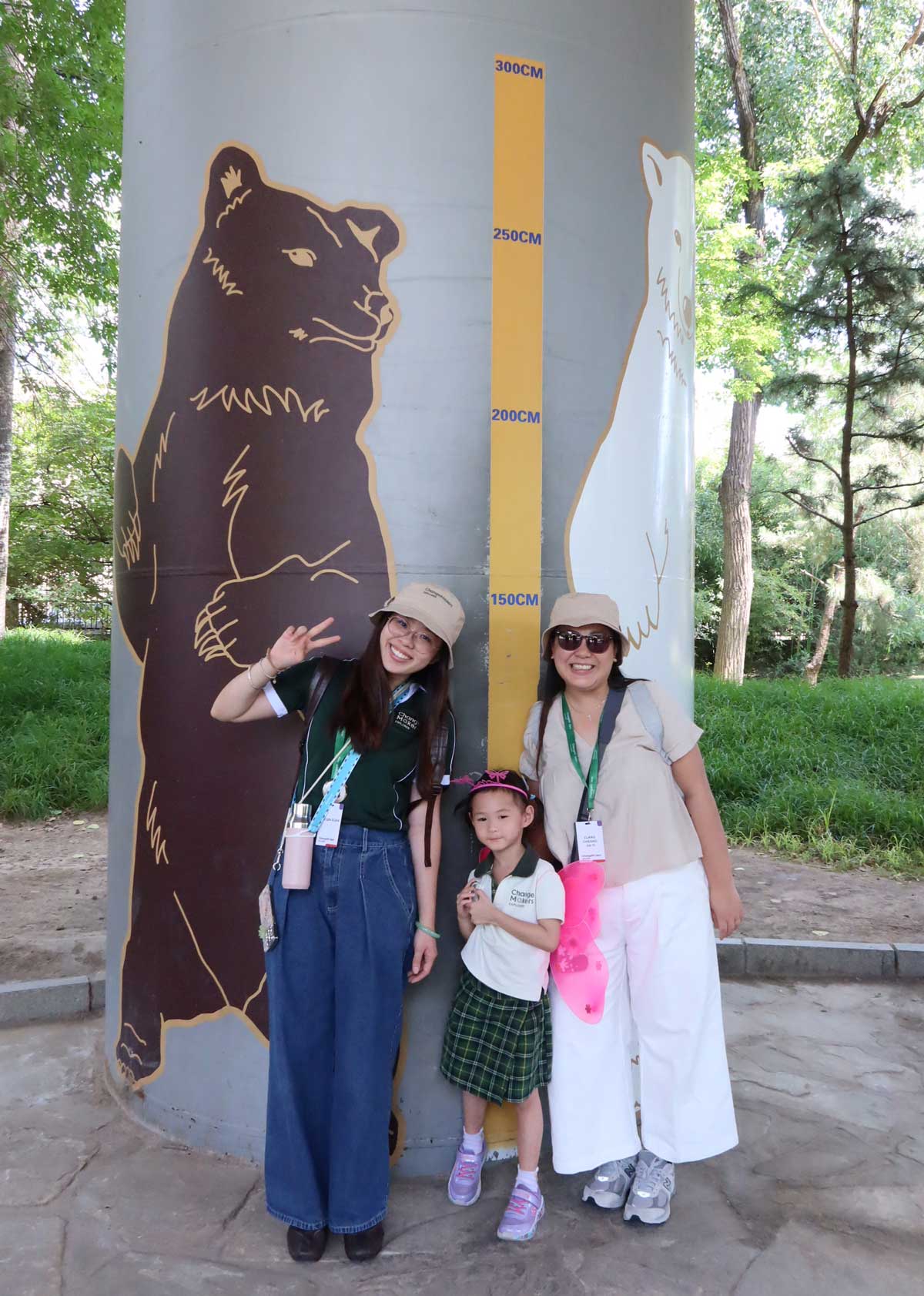
The linguistic adventure continued at the Beijing Zoo, where curiosity sparked immediate language application. From watching a polar bear up close and proudly identifying it as a “北极熊” (běi jí xióng), to comparing their own small hands against a life-sized tiger’s paw, the children were highly motivated to use their Chinese language skills to describe the incredible wonders of the natural world. By navigating these authentic settings, they built immense confidence, proving that when language is lived, it is truly learned.
Hear from Our Changemaker Parents!
It was a very eye-opening experience. It gave her a chance to be outside her comfort zone, a chance to learn to be more adaptable of new things.
Parent Darren (Dad to Amanda)
I think it’s a once-in a lifetime opportunity for the children. And even though they might be young, they will enjoy themselves!
Parent Sarah (Mum to Leia)
Children learn more through real-life experience. It was wonderful to see how easily he interacted with children of different ages and cultural backgrounds.
Parent Gradys (Mum to Lukka)
It was an immensely useful and enjoyable educational & cultural experience, and I’m glad the children had a great time experiencing it with their peers.
Parent Uday (Dad to Devan)
Every Ending Marks a New Beginning
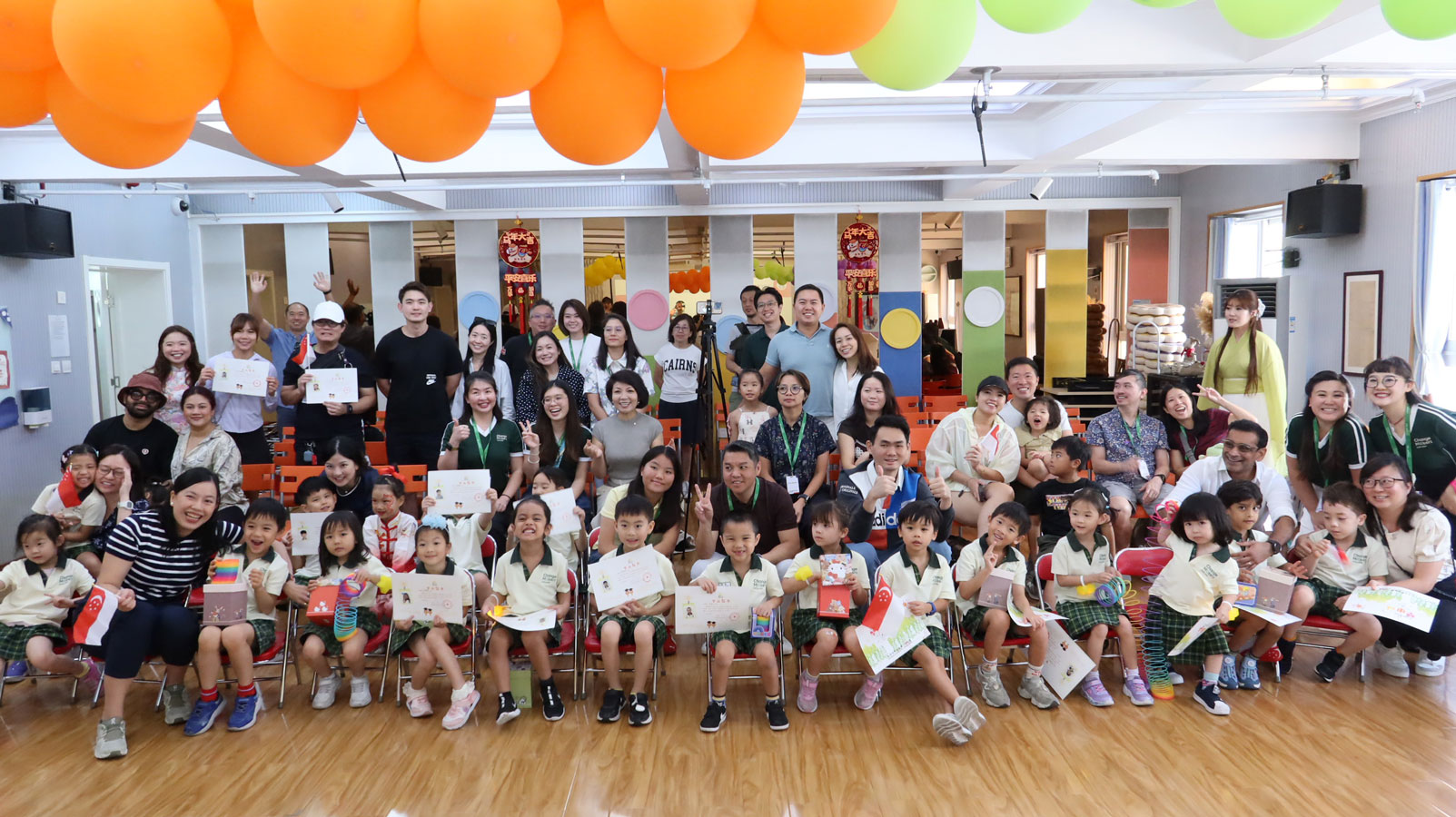
To wrap up this incredible chapter, our little Changemakers Explorers celebrated their official Graduation from the Beijing Overseas Immersion Programme.
While their 9-day journey has come to an end, the learning certainly continues. Navigating new environments has gifted them with a newfound independence, global awareness, and an openness to embrace different cultures. These takeaways and skills that will undoubtedly stay with them for life!
Enjoy up to $3,200* in enrolment perks!
Register by 30 September 2026 to enjoy this limited-time offer.
The Power of Play: Building Early Success and Future Changemakers Through Learning Landscapes
As parents, we often wonder what truly makes a preschool environment effective. Is it the curriculum, the teachers, or the physical space itself? At Changemakers Explorer, we believe it is a harmonious blend of all three. One of the most critical components of our approach is the intentional design of our Learning Landscapes.
While many might see these as simple play areas, they are actually carefully curated environments designed to foster deep, self-directed learning. Research consistently shows that when children are given the autonomy to choose their activities, their level of involvement and learning significantly increases. A study by NTUC First Campus highlights that autonomy support in the classroom is a key driver for a child’s engagement and emotional well-being1.
A Closer Look at Our Learning Landscapes
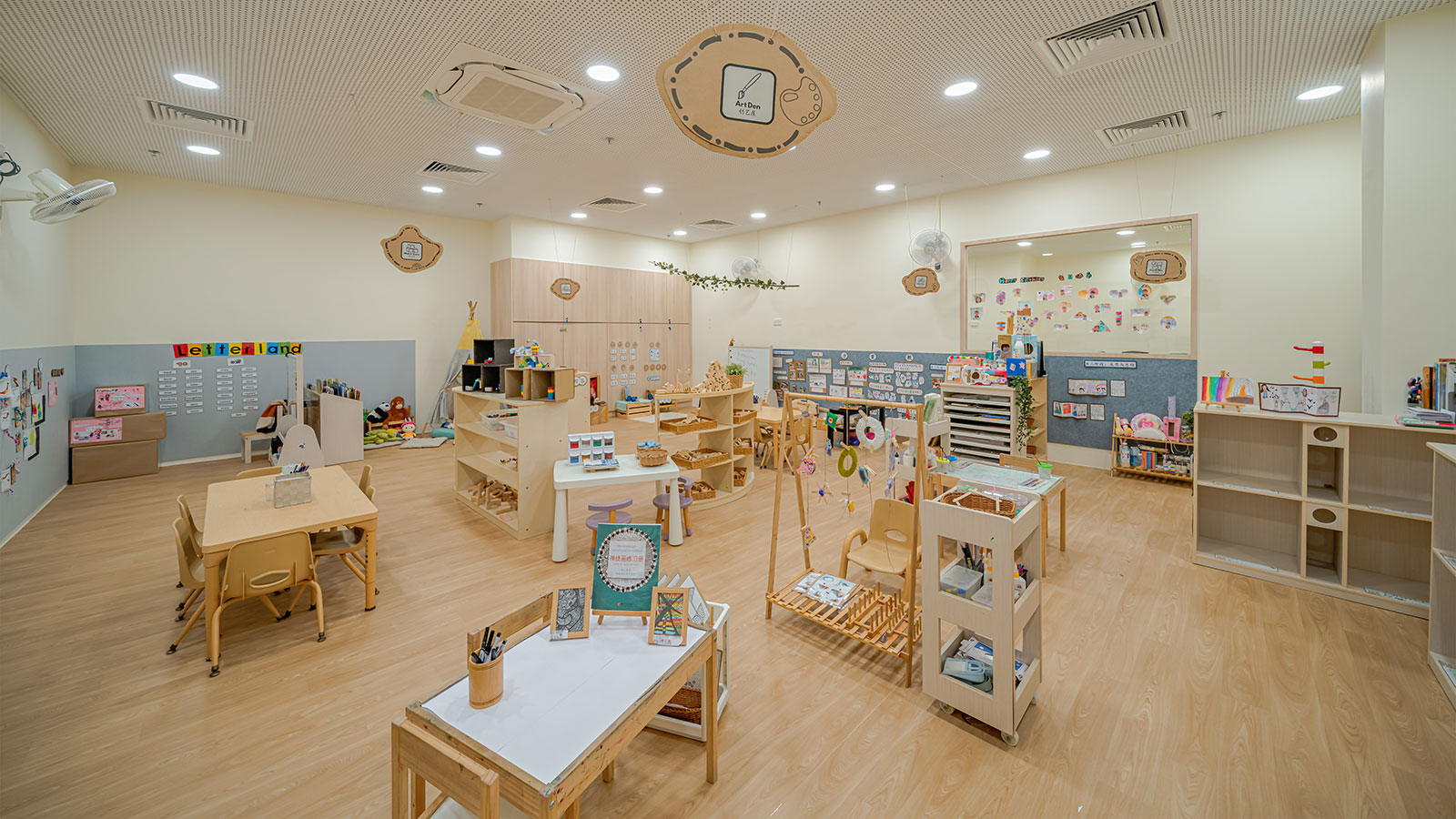
At Changemakers Explorer, we have refined the traditional learning corner into four distinct Learning Landscapes.
At our Learning Landscapes, we empower children to take the lead in their own educational journey using personalised record sheets. For our younger N2 learners, a simple checklist allows them to choose their daily activities, sparking an early interest in deciding what they want to explore. As they grow into K1, children transition to writing down their own plans and setting personal learning goals, which builds critical thinking and foresight. This thoughtful process does more than just organize their day, it nurtures a deep sense of ownership and pride in their learning that will shape their foundational learning journey.
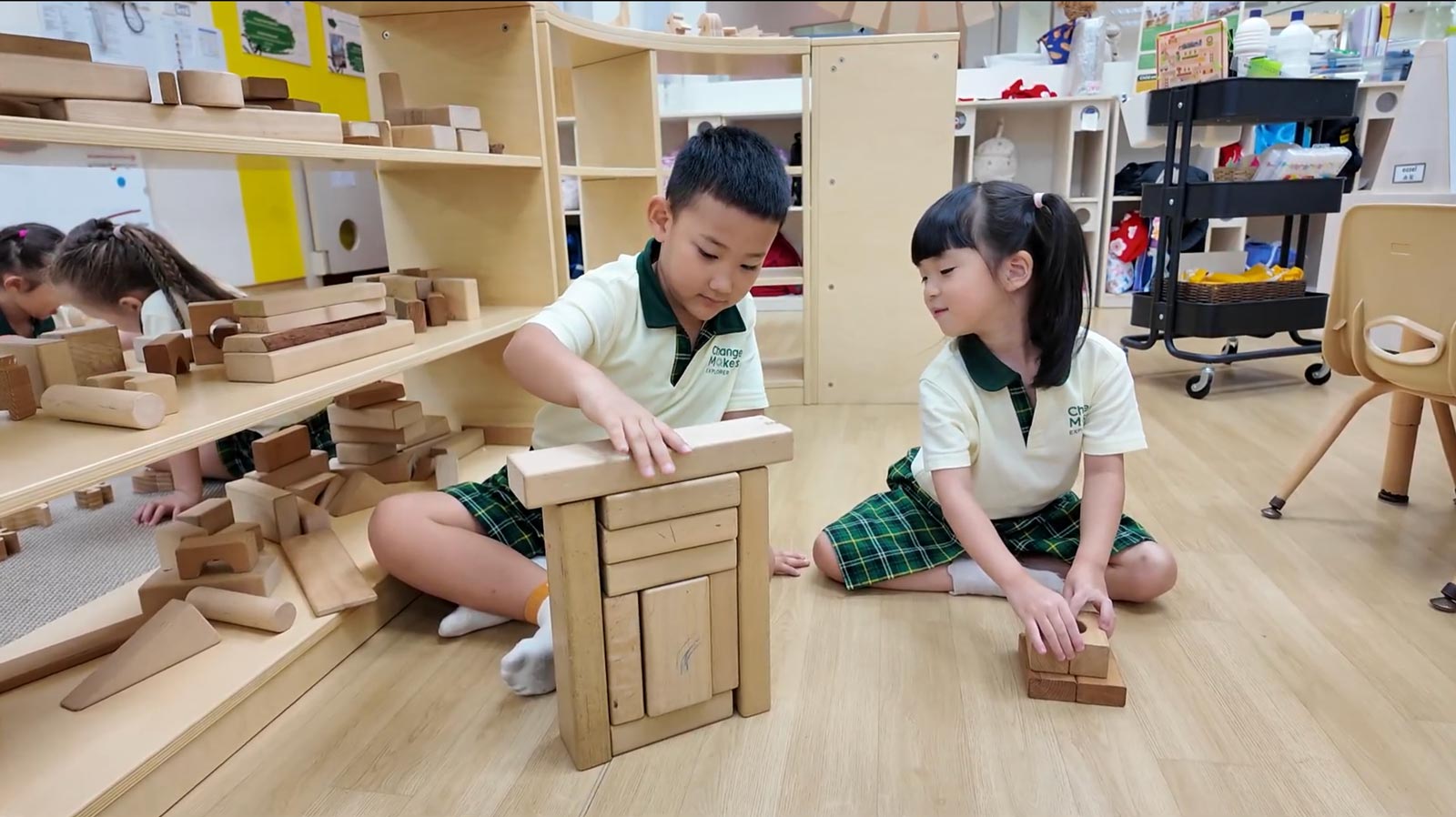
To explore balance and mathematical concepts through tactile play.
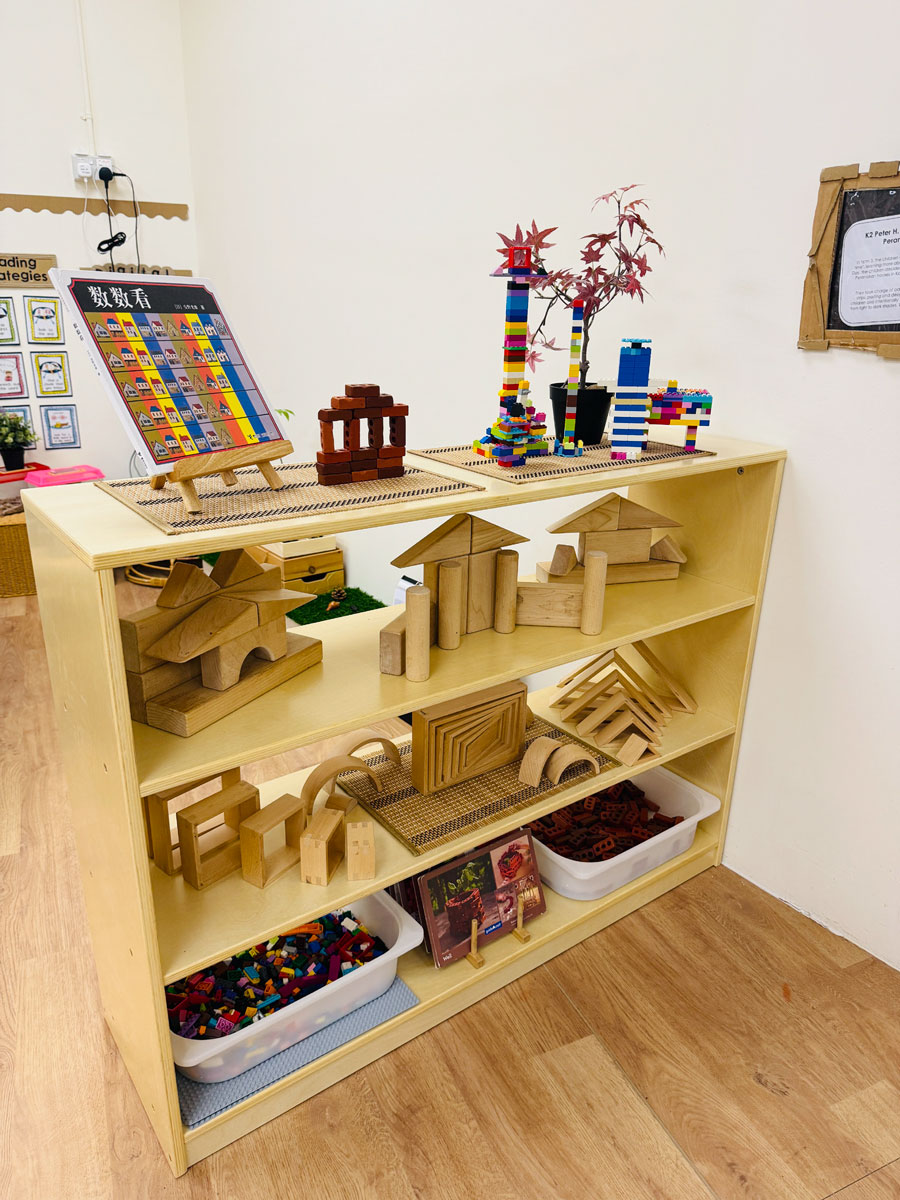
How It Works Using unique wooden blocks from New Zealand, children plan and build structures individually or with peers.
Learning Outcomes Early numeracy, cognitive flexibility, executive function, and perseverance.
Art Den
To provide a sanctuary for creative expression and fine motor development.
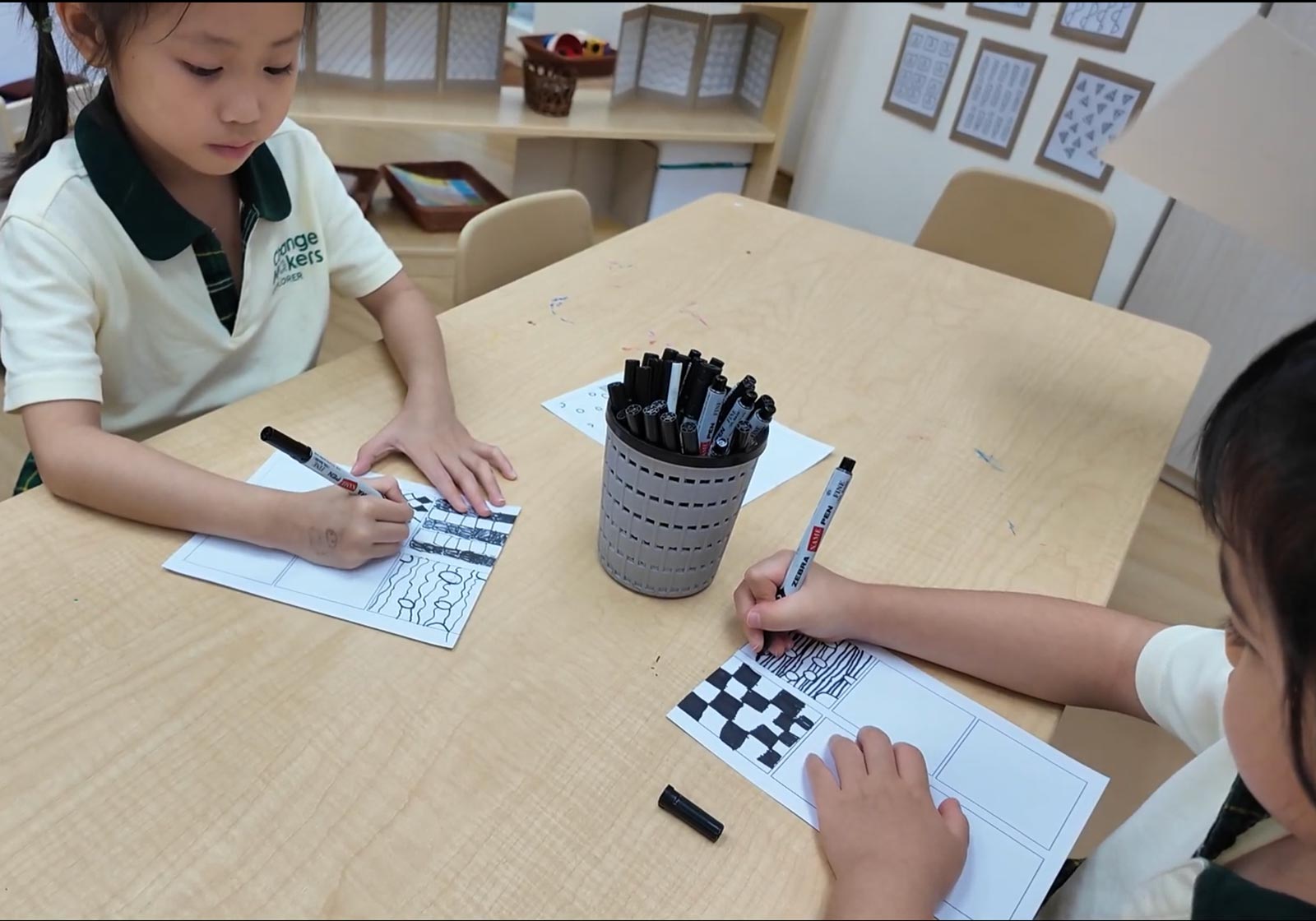
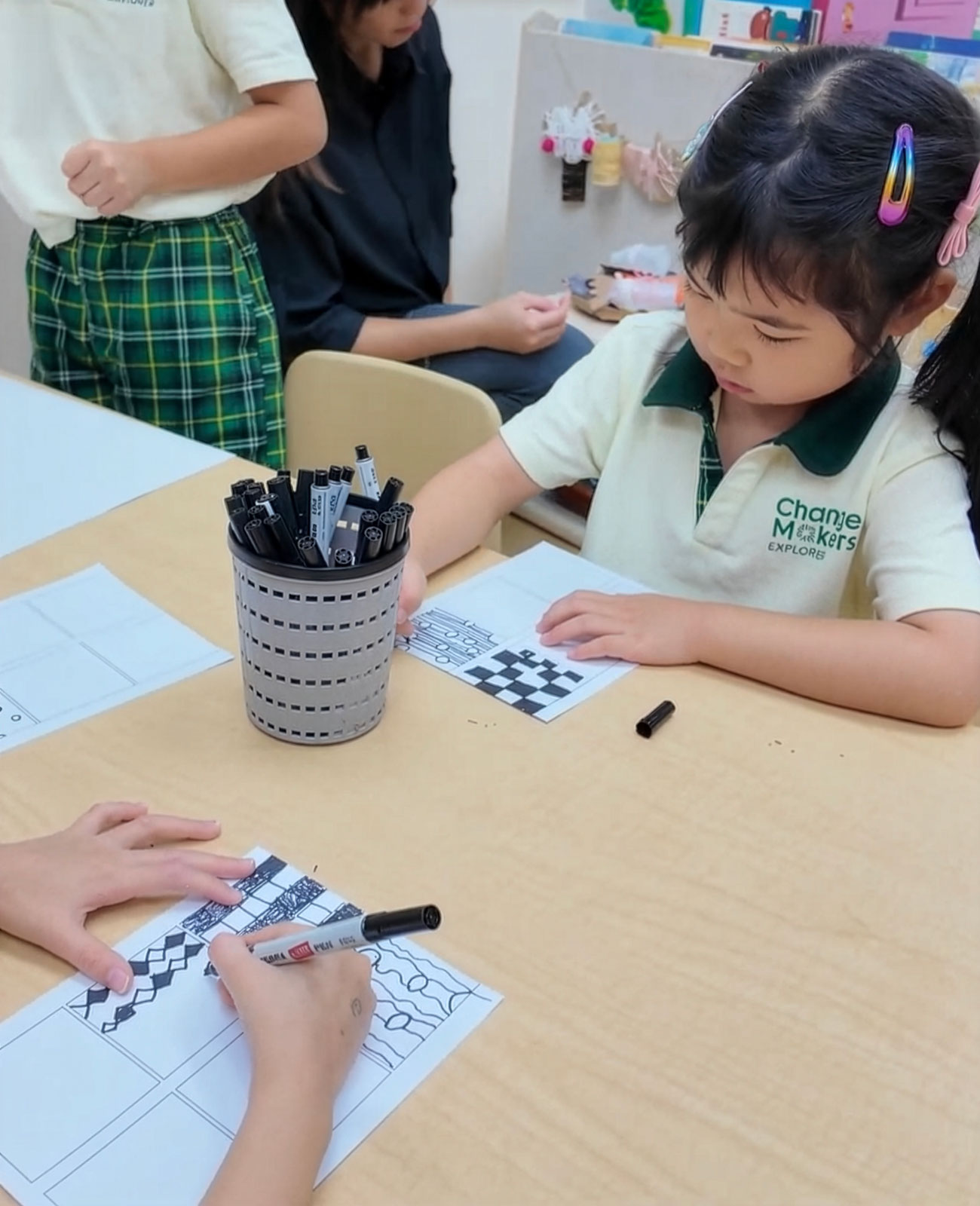
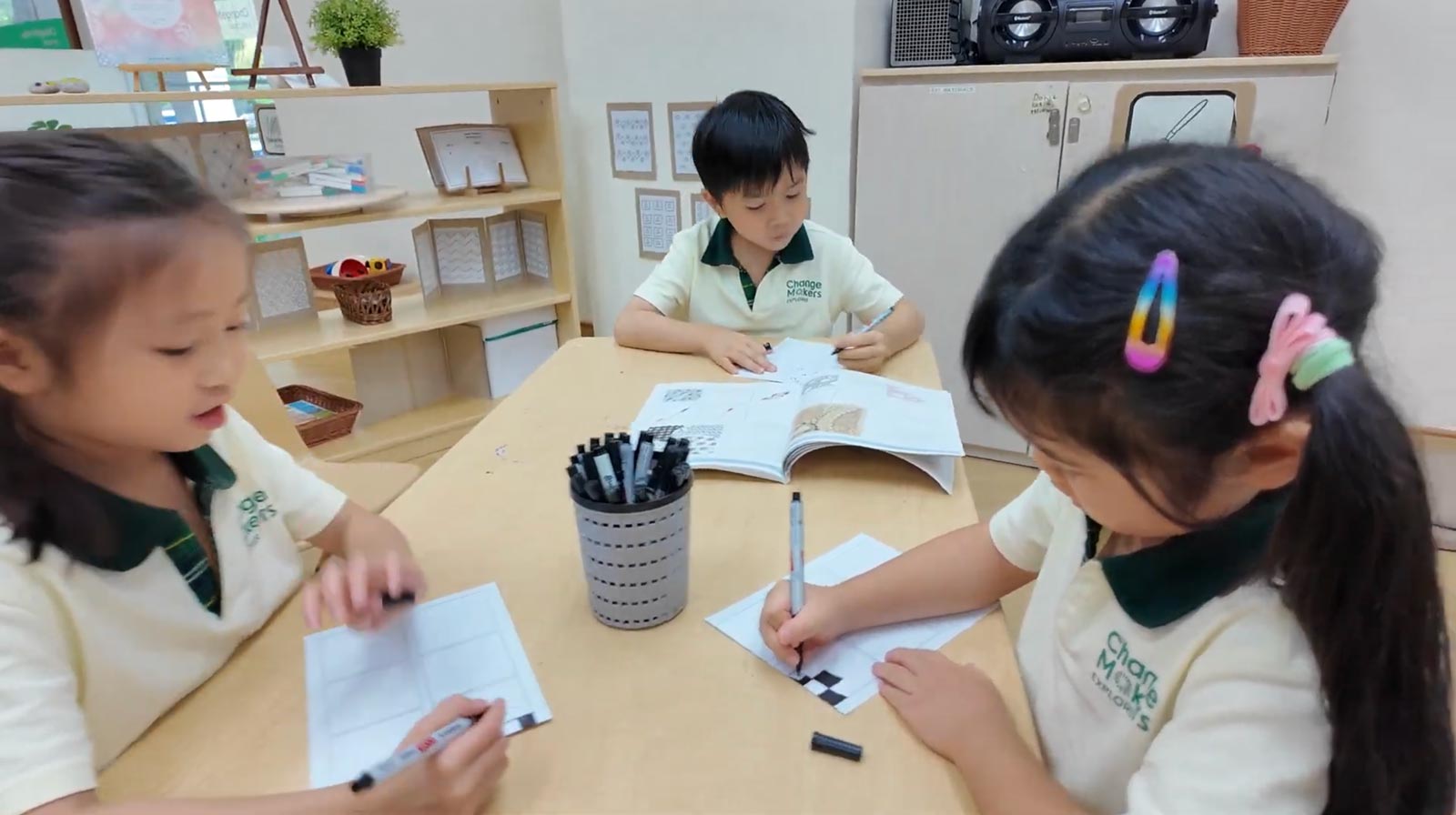
How It Works Dedicated stations for Zentangle drawing, watercolour painting, and yarn wrapping.
Learning Outcomes Artistic independence, confidence in expressing ideas, and refined fine motor skills.
Language Lab
To immerse children in a rich bilingual environment.
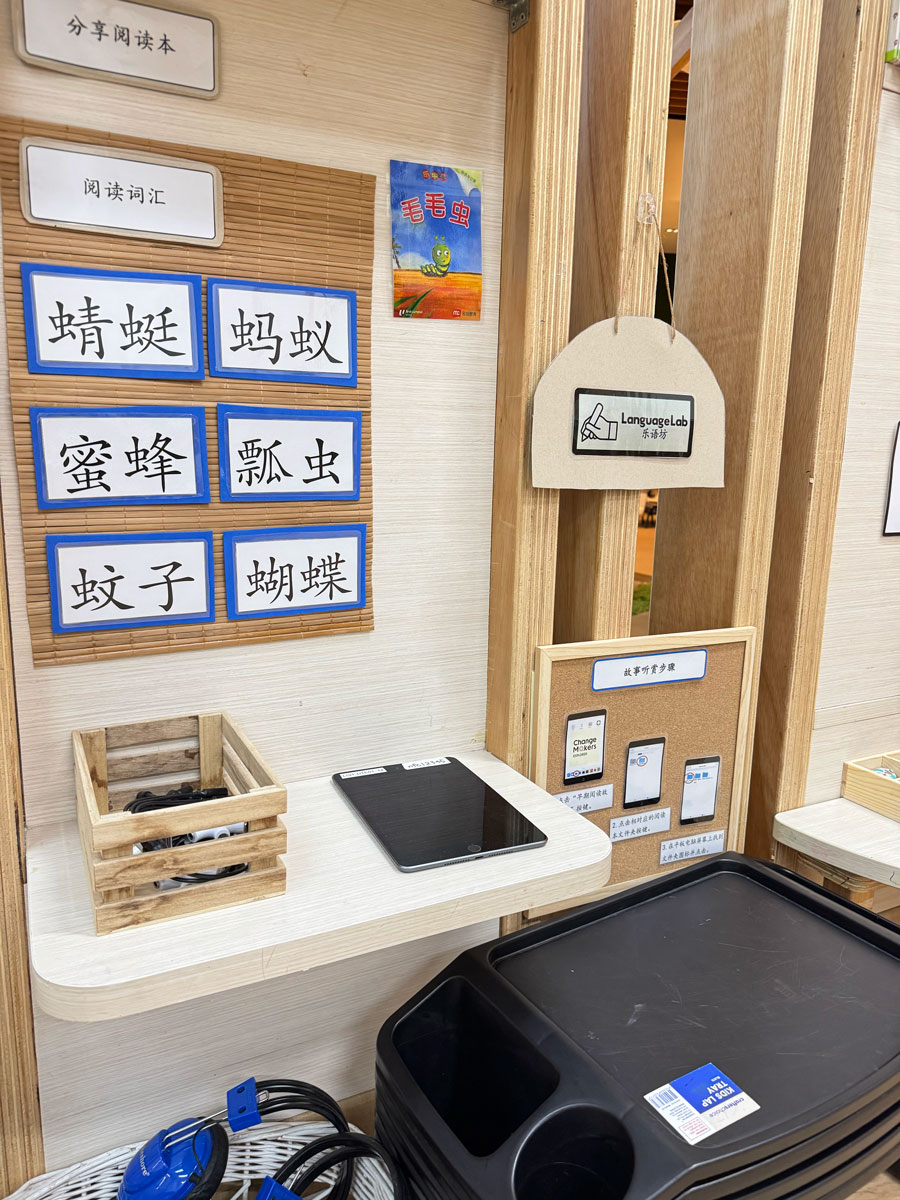
How It Works Integrated AI games, character recognition tasks, storytelling, and mini book-making.
Learning Outcomes Confident communication, joy in language use, and bilingual literacy.
Exploring the Space: From Maker to Language
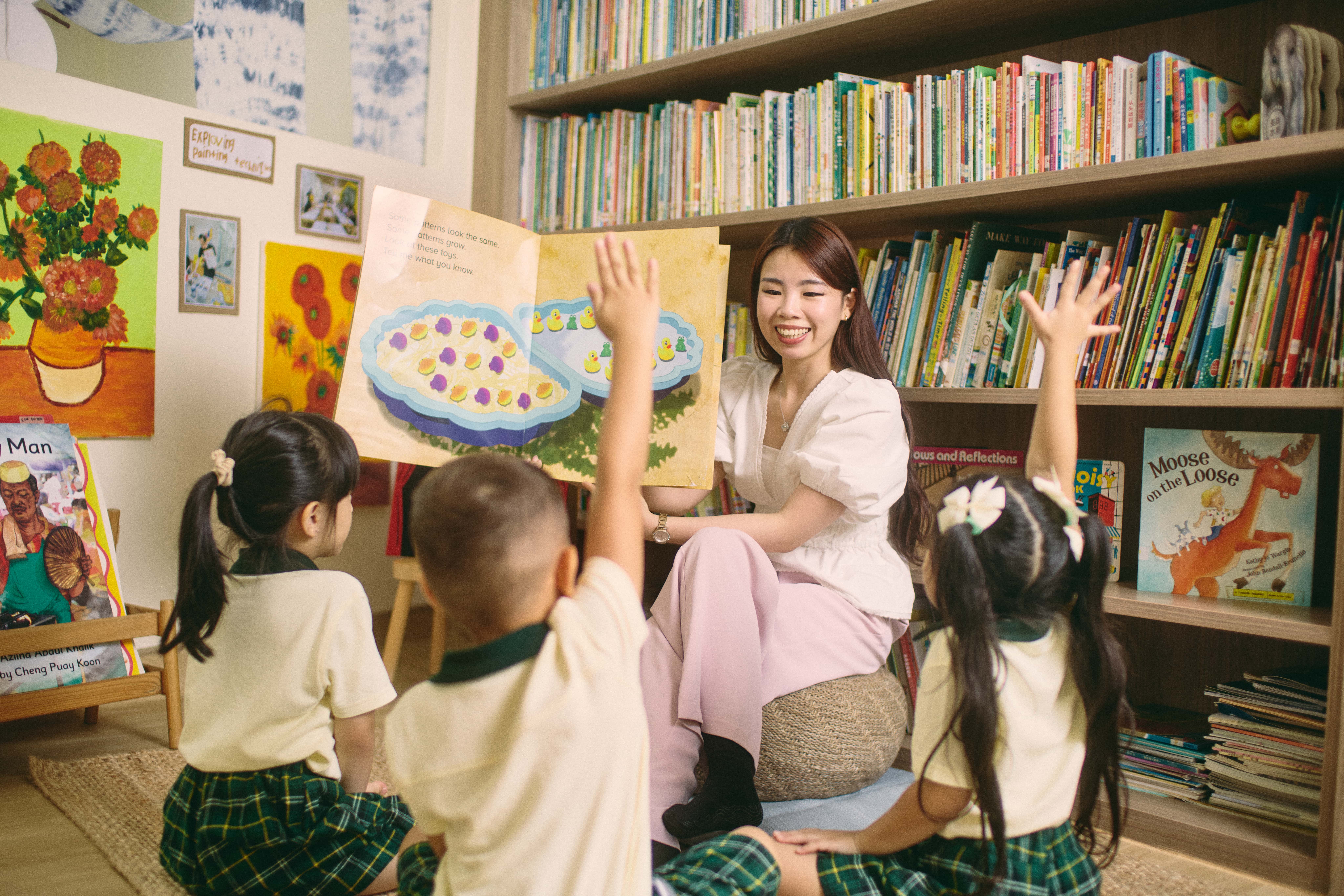
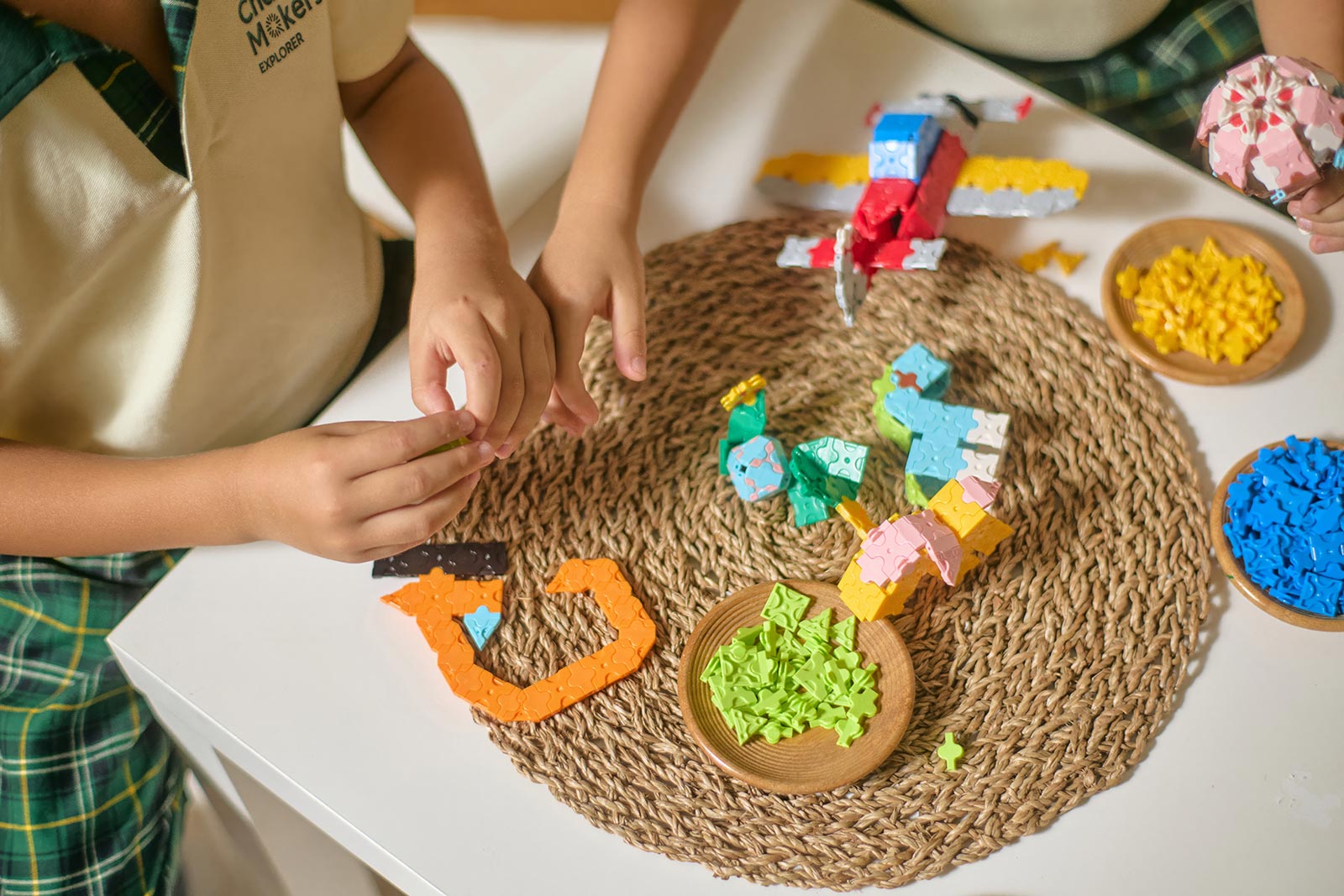
In our Maker Zone, the focus is on “doing.” It is a space where children transition from being passive observers to active creators. By working with different textures and connectors, they learn the fundamentals of physics and geometry without even realising they are “studying.”
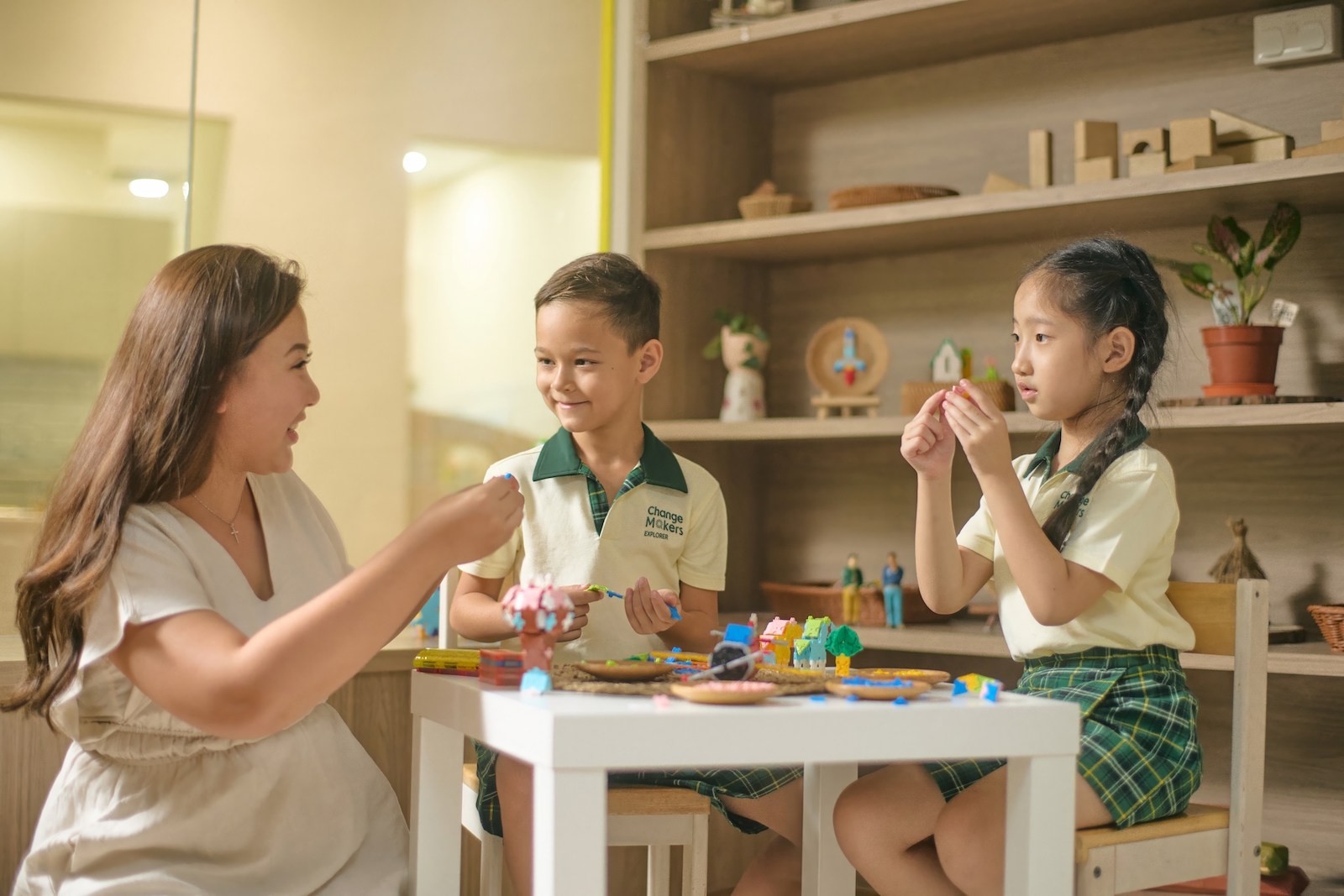
Specifically in the Maker Zone, we use LaQ (pronounced as La-cue) to help advance your kids’ learning through play. LaQ is a brilliant way to sharpen your child’s logical thinking and focus as they master 3D guides and satisfying “snap-together” challenges. It fuels their creative side, using vibrant colors and open-ended buildings to turn imaginative ideas into artistic reality. While they play, they’re also refining fine motor skills and coordination through precise hand work. Best of all, it builds social confidence by encouraging kids to share their work and collaborate with other children.
The Art Den is designed to be a calm, inspiring space. We believe that art is not just about the final product but the process of discovery. Whether they are experimenting with the flow of watercolours or the rhythm of Zentangle, children learn to trust their unique perspectives and make independent choices. Our activities are intentionally designed to grow alongside your child, increasing in difficulty and introducing new skills as they advance through each service level.
In the Language Lab, we embrace the future by integrating AI-assisted learning with traditional storytelling to create a rich bilingual environment. A key feature of this zone is harnessing an interactive AI to refine Chinese pronunciation through an App. The app listens in real-time as children read, offering instant feedback and a personalized learning pace. By blending cutting-edge tech with playful, creative environments, we turn language mastery into an inspired adventure.
Another key feature of this zone is the use of visual scaffolding, a method where we provide visual aids like character cards and action pictures to help children bridge the gap between abstract words and their meanings. By pairing spoken language with concrete images, children can grasp new vocabulary more quickly and build the confidence to communicate without feeling overwhelmed by complex verbal explanations.
The Puzzle Den serves as our numeracy hub. Mathematical thinking is nurtured through hands-on challenges. As children work through a difficult puzzle or identify a complex pattern, they are building the cognitive architecture required for advanced logic and arithmetic.
The Unique Tarata Experience
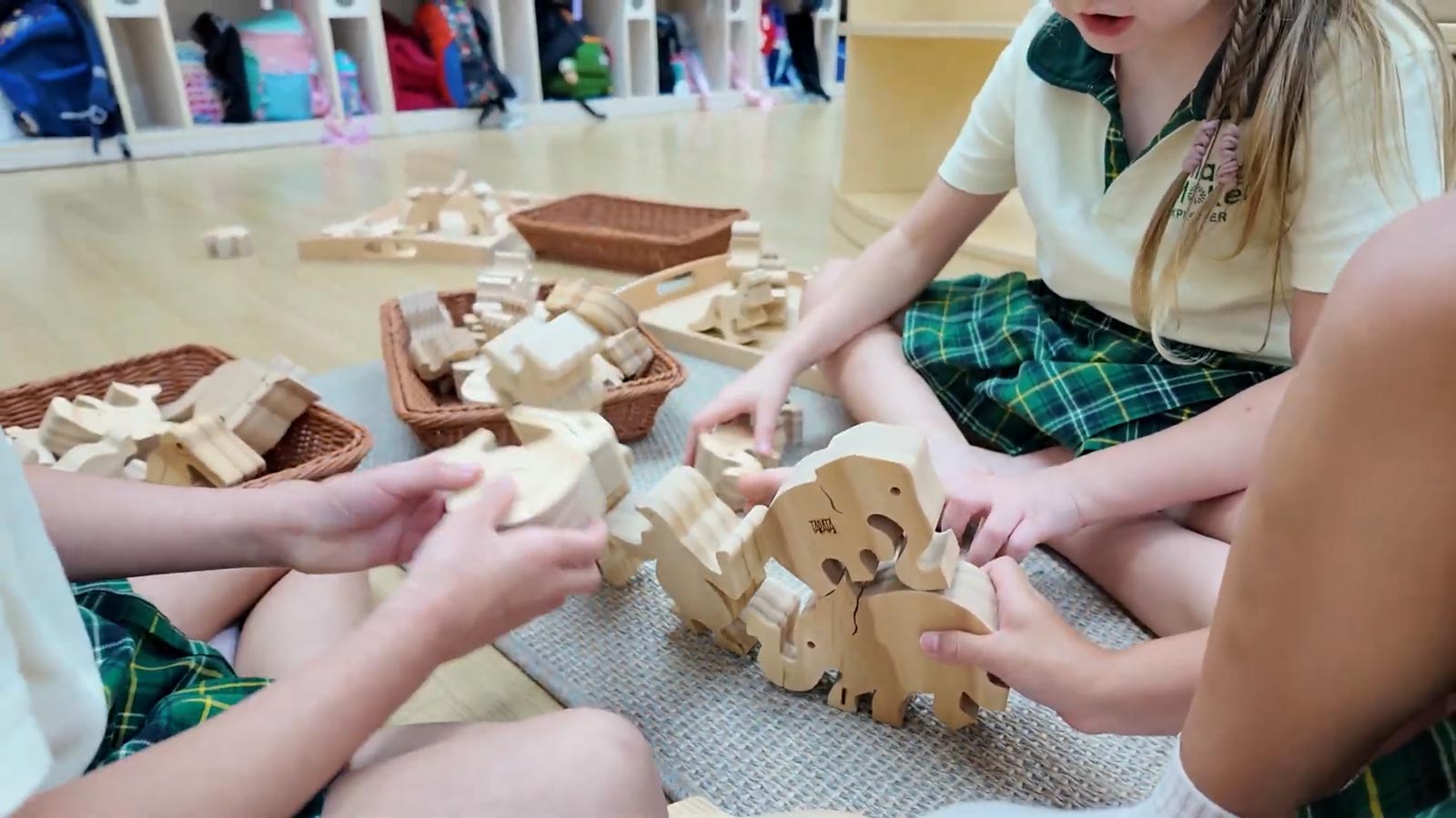
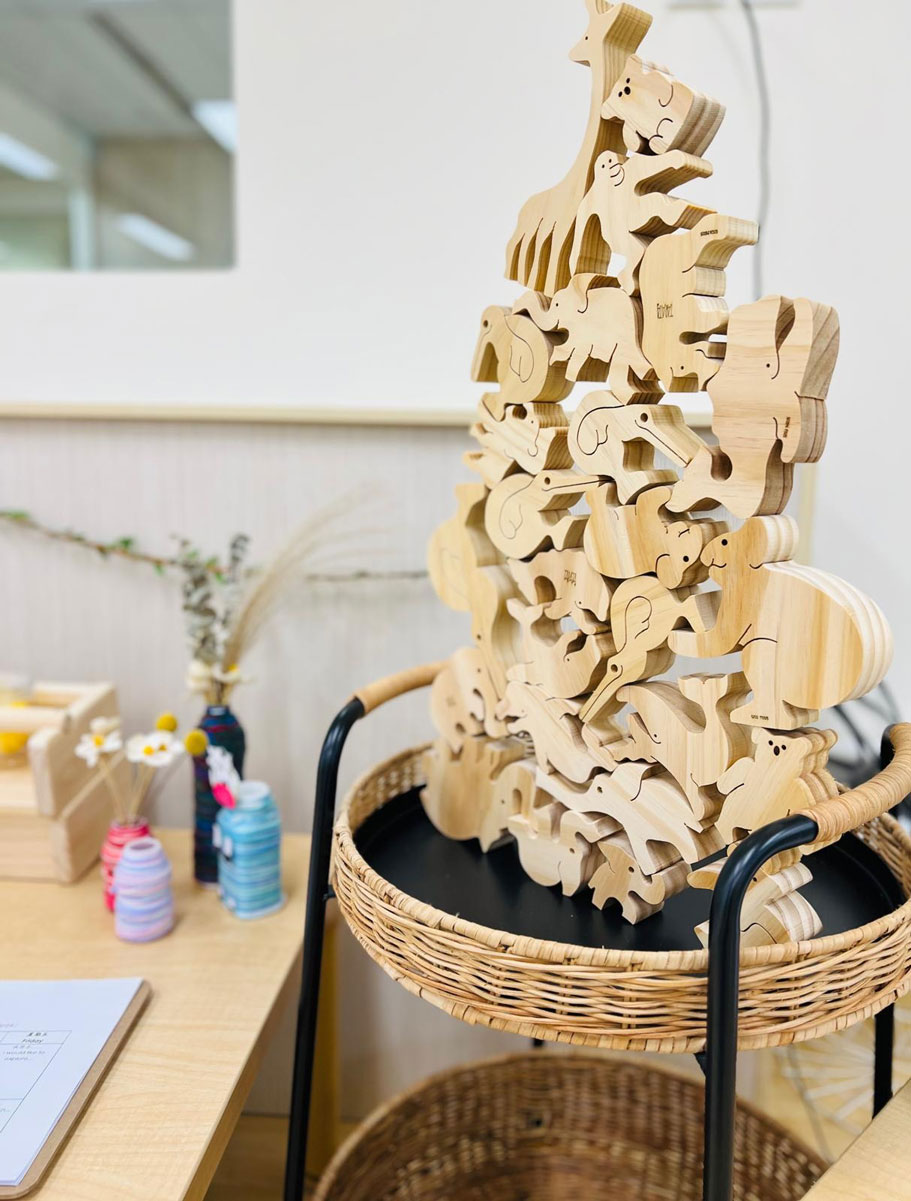
One aspect that truly sets Changemaker Explorer apart is our Tarata Blocks zone. Sourced directly from New Zealand, these unique, high-quality wooden blocks offer a tactile experience that standard plastic toys simply cannot match. Because the blocks come in various natural shapes and weights, they require a higher level of focus and a deeper understanding of balance.
When children collaborate in the Tarata zone, they aren’t just building towers; they are practicing communication, negotiation, and emotional regulation. It is a space where “trial and error” is celebrated, helping children develop the grit needed to see a project through to completion.
Why Learning Landscapes Result in Better Outcomes
When viewed in totality, these four spaces work together to produce three main learning outcomes for every child:
Greater Self-Directedness: By choosing their space, children take ownership of their learning journey. They learn to follow their interests, which fosters a lifelong love for exploration.
Stronger Problem-Solving Skills: Each space presents unique challenges, from balancing a Tarata block to finding the right word in the Language Lab. Children learn to think critically and approach problems from multiple angles.
Improved Focus and Perseverance: Whether it is completing a complex puzzle or finishing a piece of art, our spaces encourage children to stay engaged for longer periods, building the “mental stamina” necessary for primary school and beyond.
Enjoy up to $3,200* in enrolment perks!
Register by 30 September 2026 to enjoy this limited-time offer.
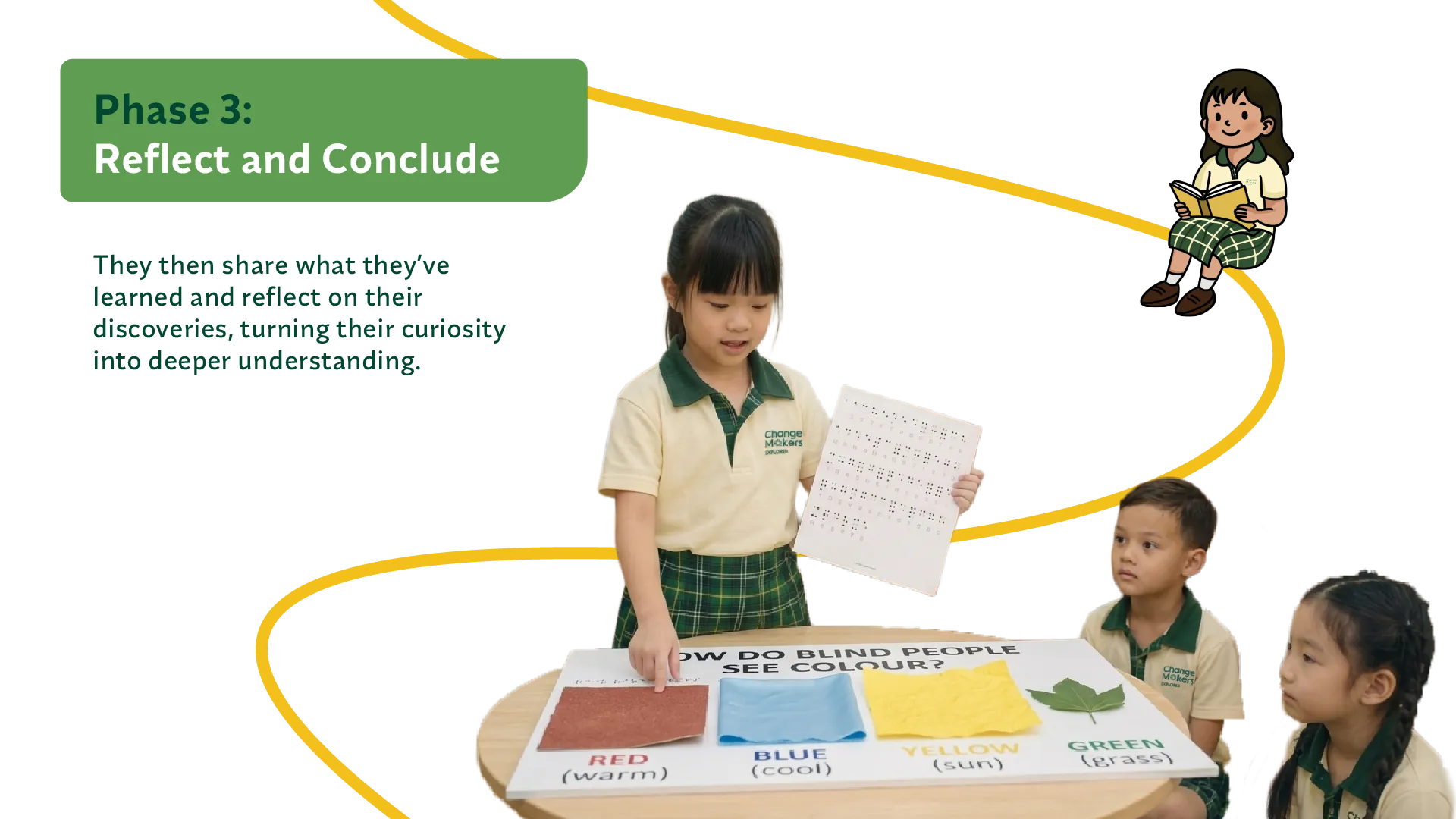
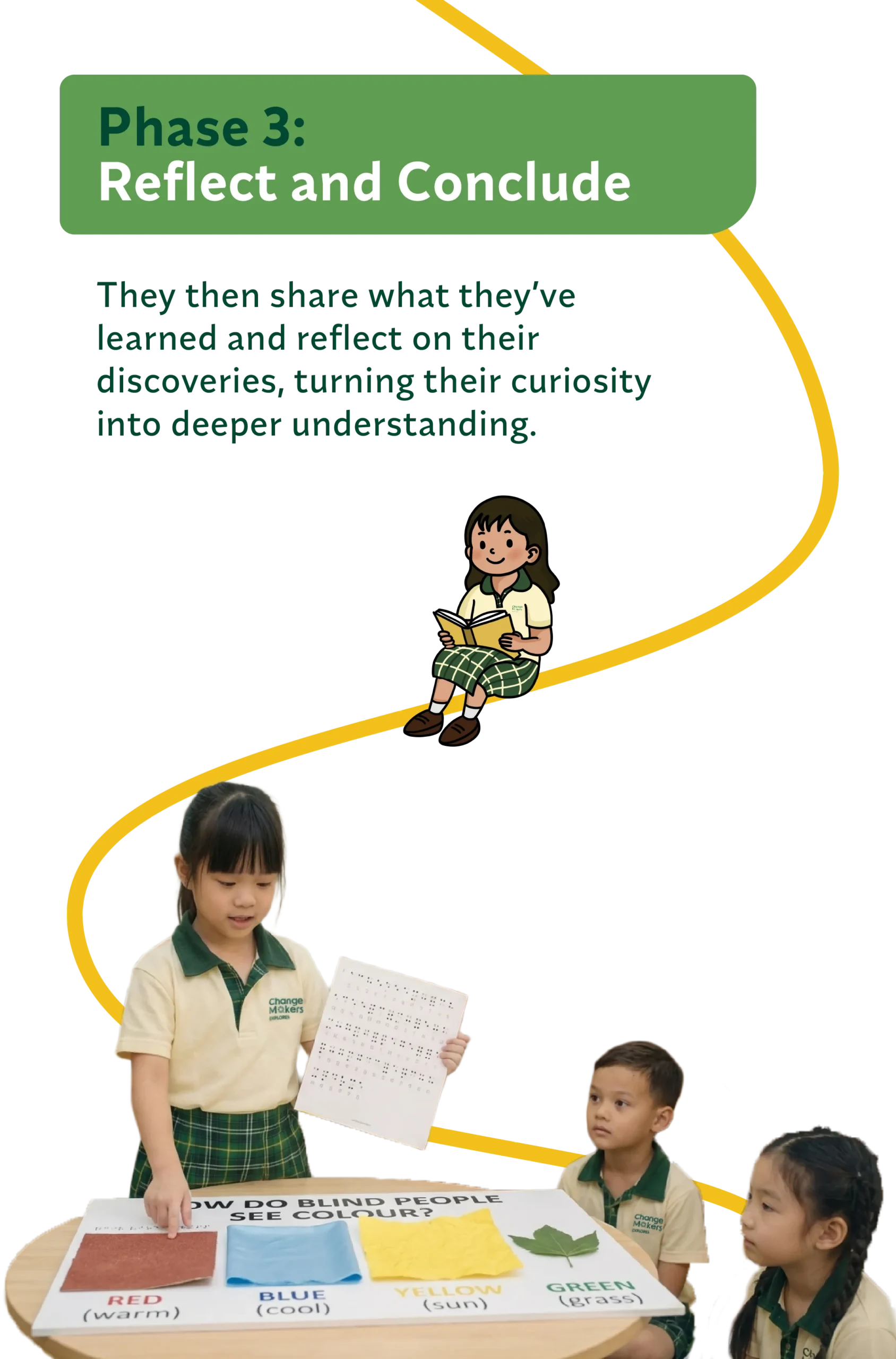
“Red feels like the warmth of a fire or the heat of the sun on your skin.”
“Blue can be described as the cool, refreshing rush of water over your hands.”
In an Age of Instant AI AnswersChildren Must Learn to Ask the Right Questions
When a machine can generate facts in seconds, the most valuable human skill is no longer knowing what to say. It is knowing what to ask—and how to feel.
A Parent’s Dilemma
If you type “How do you explain colour to someone who cannot see?” into an AI prompt box, it will generate a perfectly articulated essay in two seconds. It will tell you that red feels like the heat of the sun, and blue feels like the cool rush of a river. It is entirely accurate. And it is a shortcut that bypasses the most crucial part of childhood.
As parents raising children in Singapore during the rapid acceleration of AI, a profound anxiety is taking root: If a machine can know everything, what is left for my child to learn? Are we simply raising them to compete with search engines?
The truth is, an AI prompt provides an instant result, but it strips away the cognitive struggle required to build intelligence. When a five-year-old asks a difficult question, they don’t need a data output. They need an experience. They need to step outside, close their eyes, and physically feel the difference between warm asphalt and cool grass. They need the foundation, not the shortcut.
Data vs. Discovery
Why a prompt is never enough for a developing mind.
The Shortcut
AI Prompt
Information is processed linearly. A machine synthesises text to generate an instant output. At best, it is a passive exchange of facts. At worst, it presents AI hallucinations and inaccuracies that a child must learn to discern. Ultimately, this digital shortcut robs them of the critical thinking and resilience required to discover the truth themselves.
The Foundation
Symphonic Learning™
Learning is multi-dimensional. Through Symphonic Learning™, we bring Play, Arts, Language, and Science into harmony. By investigating with their senses and connecting emotionally with their peers, children create rich, collaborative experiences that cultivate insight, perspective, and a profound, lived understanding.
At Changemakers Explorer, we show exactly why a lived, physical experience triumphs over a digital shortcut. We see this Symphonic Learning methodology come to life beautifully in our K2 Builders’ Project.
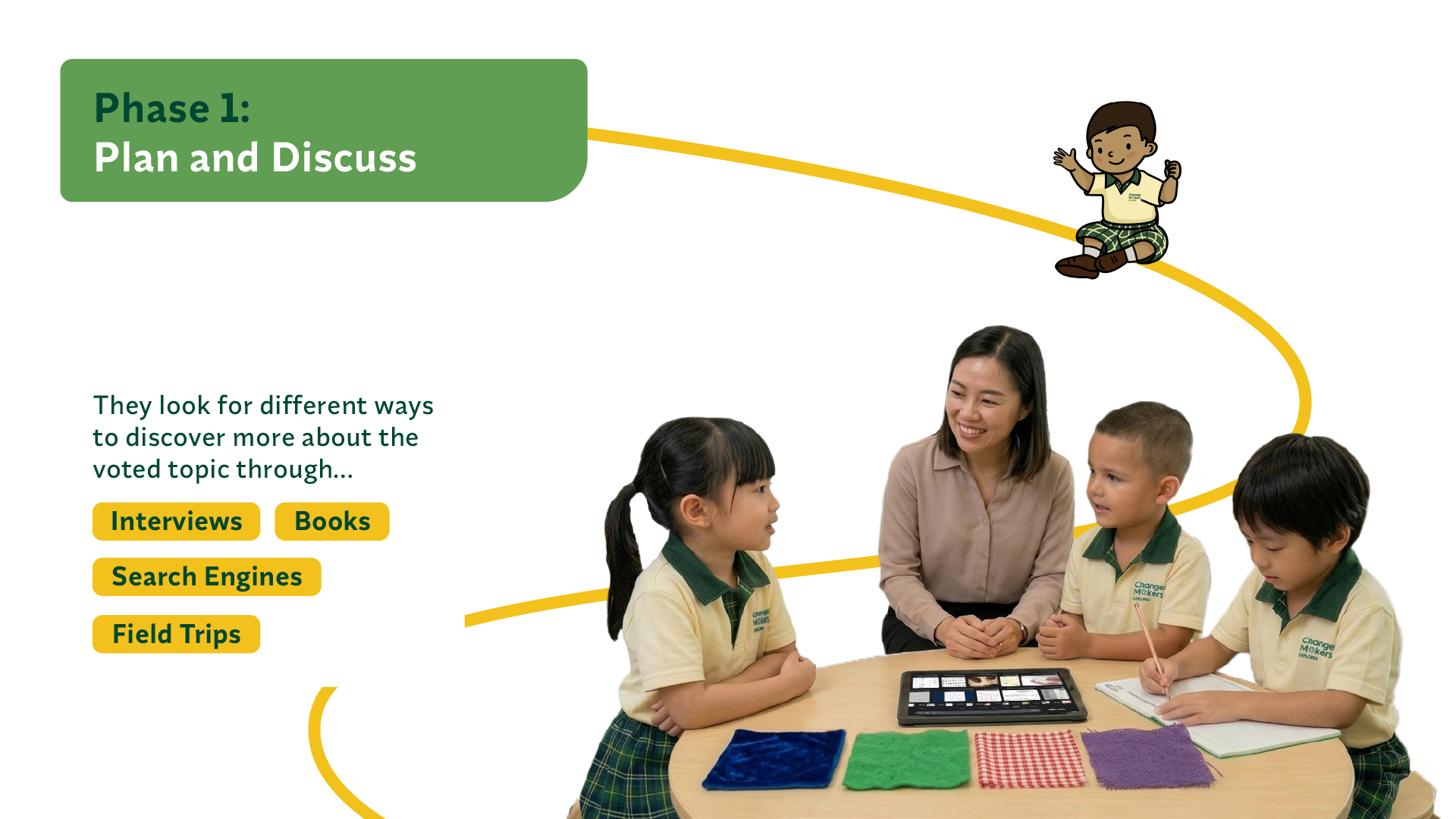
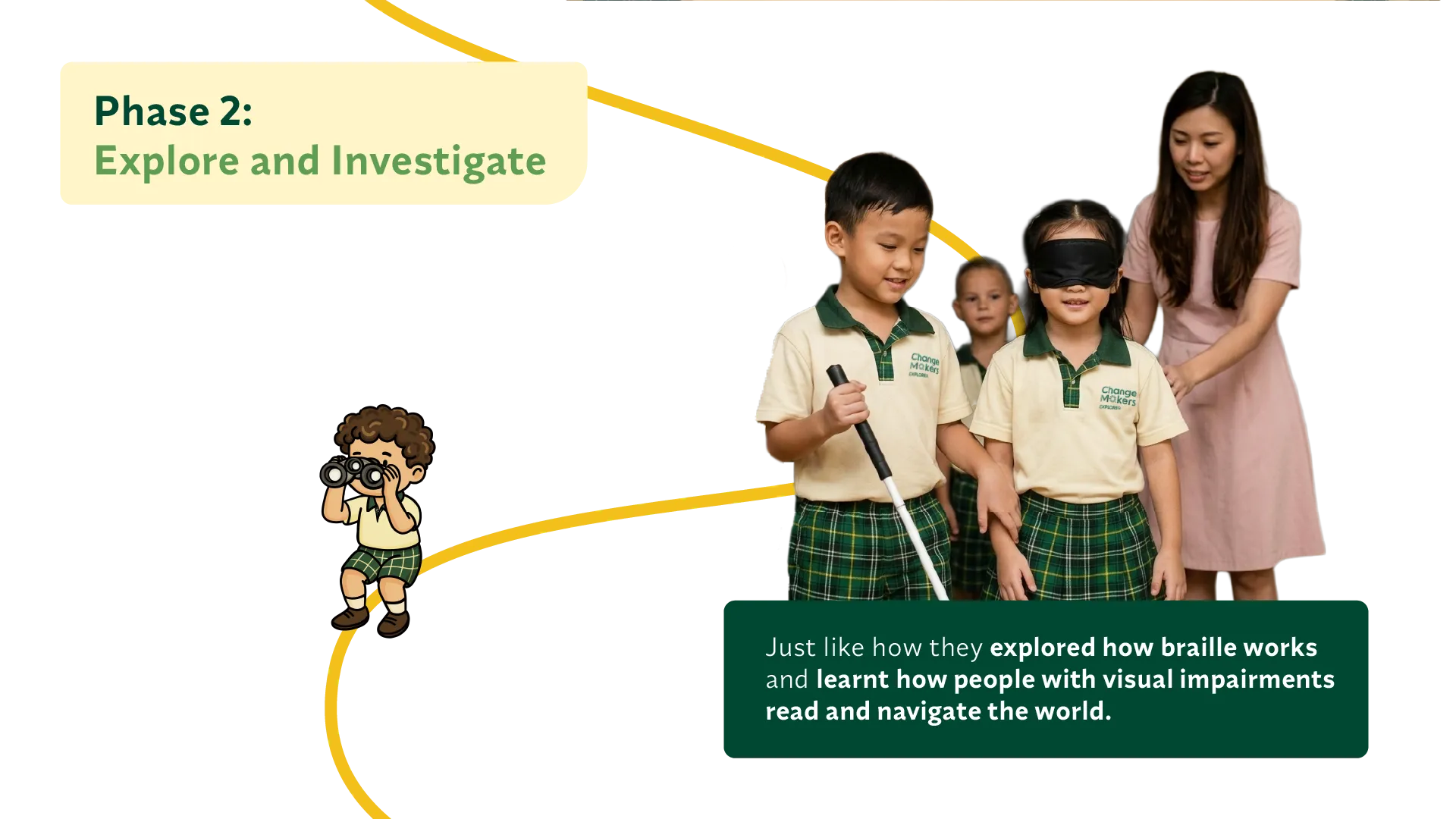
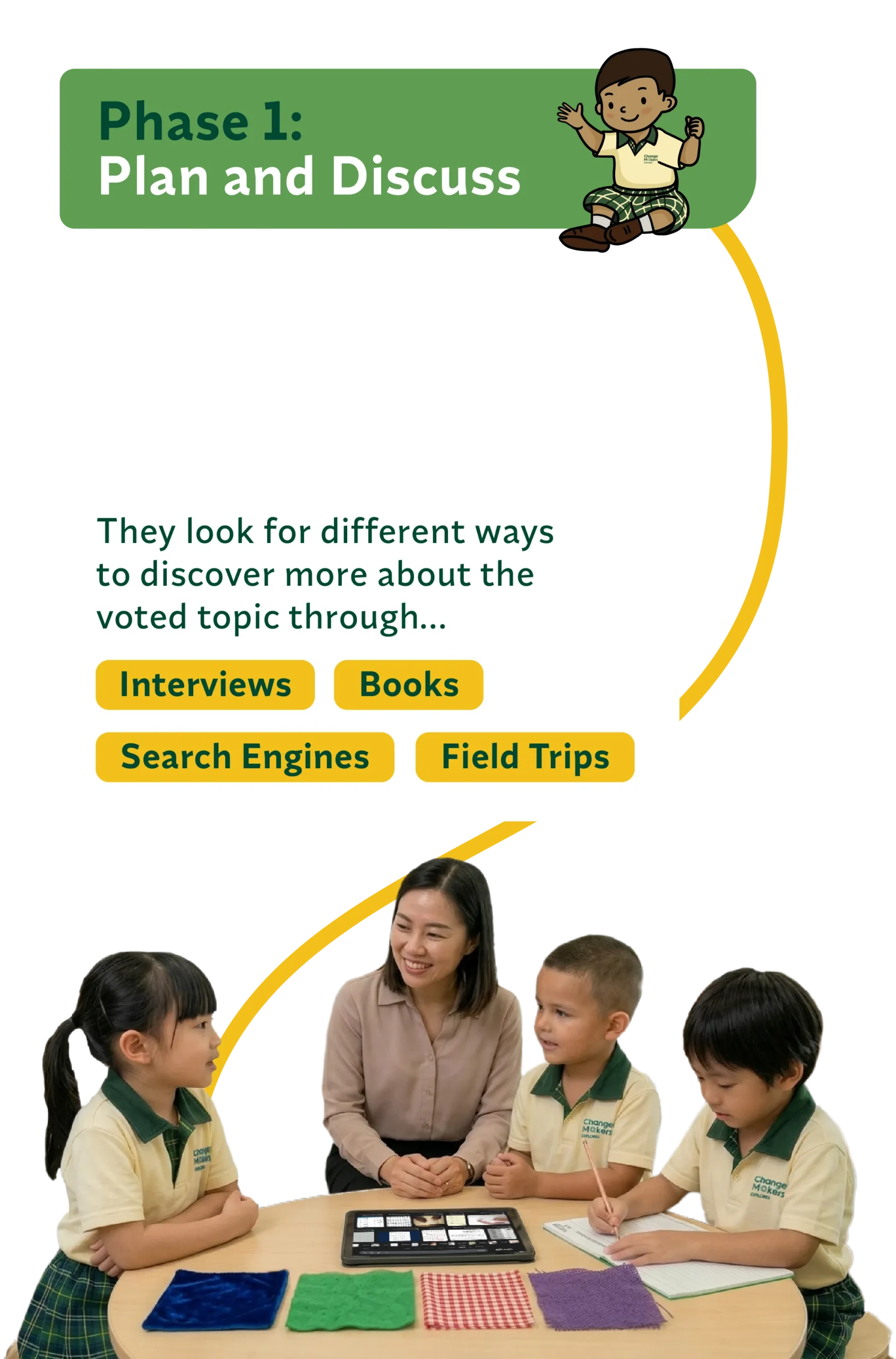
The children were adding to their classroom’s Wall of Questions, and a democratic vote was held between two burning topics: “Why do otters live in water but come up to land?” and “How do visually impaired people know braille if they cannot see?” When the braille question won, they didn’t consult a screen. They became investigators.
A Heart, Not a Hard Drive
This K2 project exposes exactly what AI lacks. An algorithm can instantly generate a 500-word essay on the mechanics of braille. But an algorithm cannot vote on a topic of shared interest. It cannot feel the texture of a raised dot, nor can it look around a physical classroom and feel the urgent, human desire to make that space more welcoming for a friend.
In an age of artificial intelligence, children will thrive not because they can retrieve answers fastest, but because they know what questions to ask, how to think deeply, and how to distinguish truth from falsehood.
As we step further into an automated world, our pedagogy at Changemakers Explorer remains fiercely human. We are not teaching children to compete with machines on data retrieval. We are building the unshakable foundations of empathy, creativity, and critical thought that algorithms can never replace. Because the leaders of tomorrow won’t be the ones who can code the fastest; they will be the ones who know what problems are actually worth solving.
Nurture the Human Advantage
Through our proprietary Symphonic Learning™ approach, your child develops the capabilities the future will demand. From bilingual fluency and cognitive development to the emotional intelligence nurtured through collaborative inquiry, every experience is designed to strengthen the human capacities no technology can replace – empathy, creativity, judgement and deep understanding. Because curiosity should not be shaped by screens alone, but deepened through rich, real-world experiences.
Enjoy up to $3,200* in enrolment perks!
Register by 30 September 2026 to enjoy this limited-time offer.
Meaningful Meals: How We Approach Preschool Meals at Changemakers Explorer
As parents, we spend a lot of time worrying about what our children eat. Is it nutritious? Is it safe? And perhaps most importantly, will they actually eat it?
As parents, we spend a lot of time worrying about what our children eat. Is it nutritious? Is it safe? And perhaps most importantly, will they actually eat it?
Recent conversations in Singapore have highlighted just how important school meals are. Food is not merely fuel to get a child through the day. It is a source of comfort, a lesson in culture, and a daily touchpoint for safety and care.
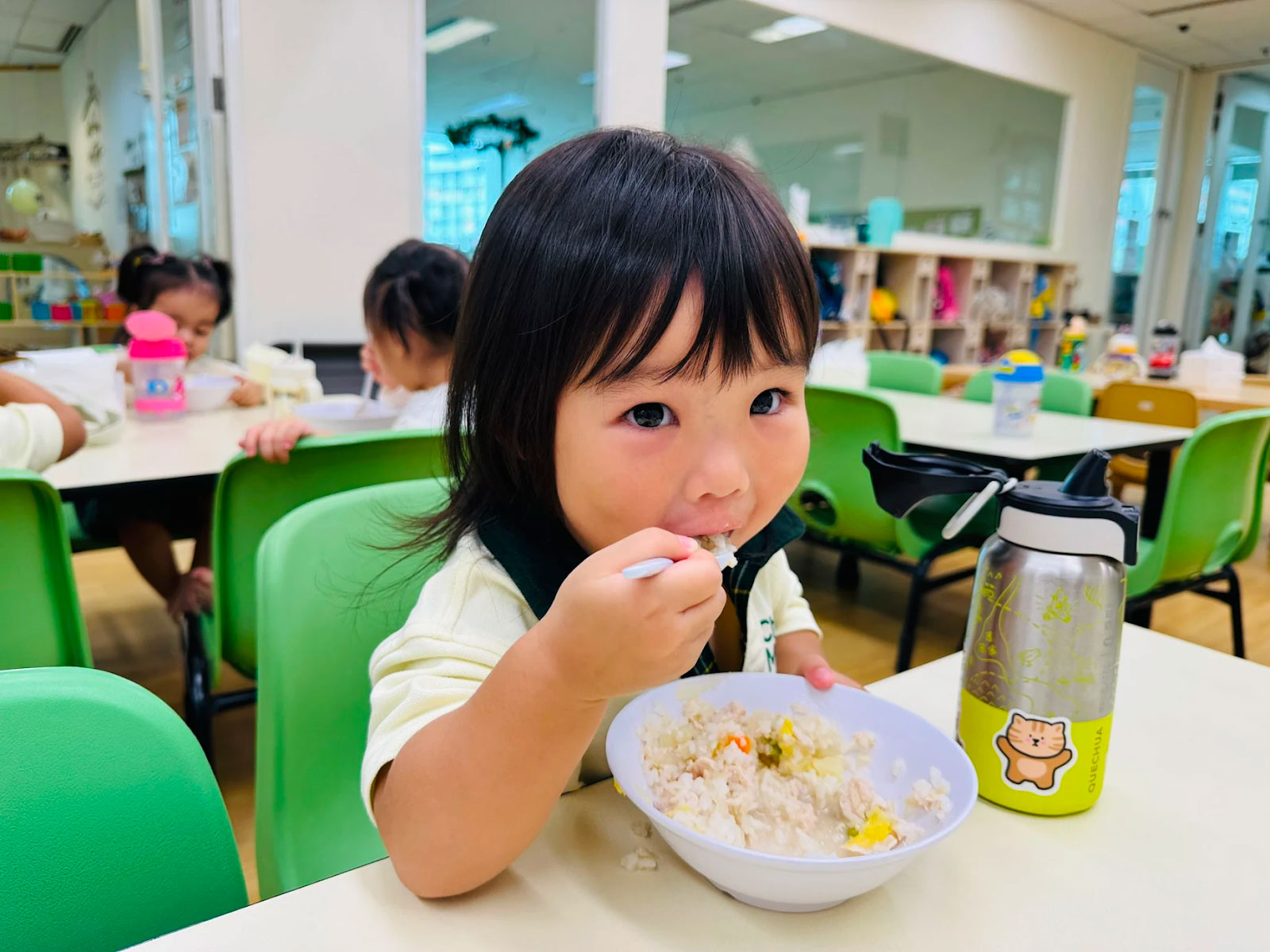
At Changemakers Explorer, our approach to food is simple. We believe in serving meals that are familiar, freshly prepared, and balanced. We want mealtime to be a stress-free part of the day where children feel at home.
The Importance of an In-House Kitchen
We believe the best way to ensure quality is to keep it close to home. That is why every one of our centres operates its own in-house kitchen.
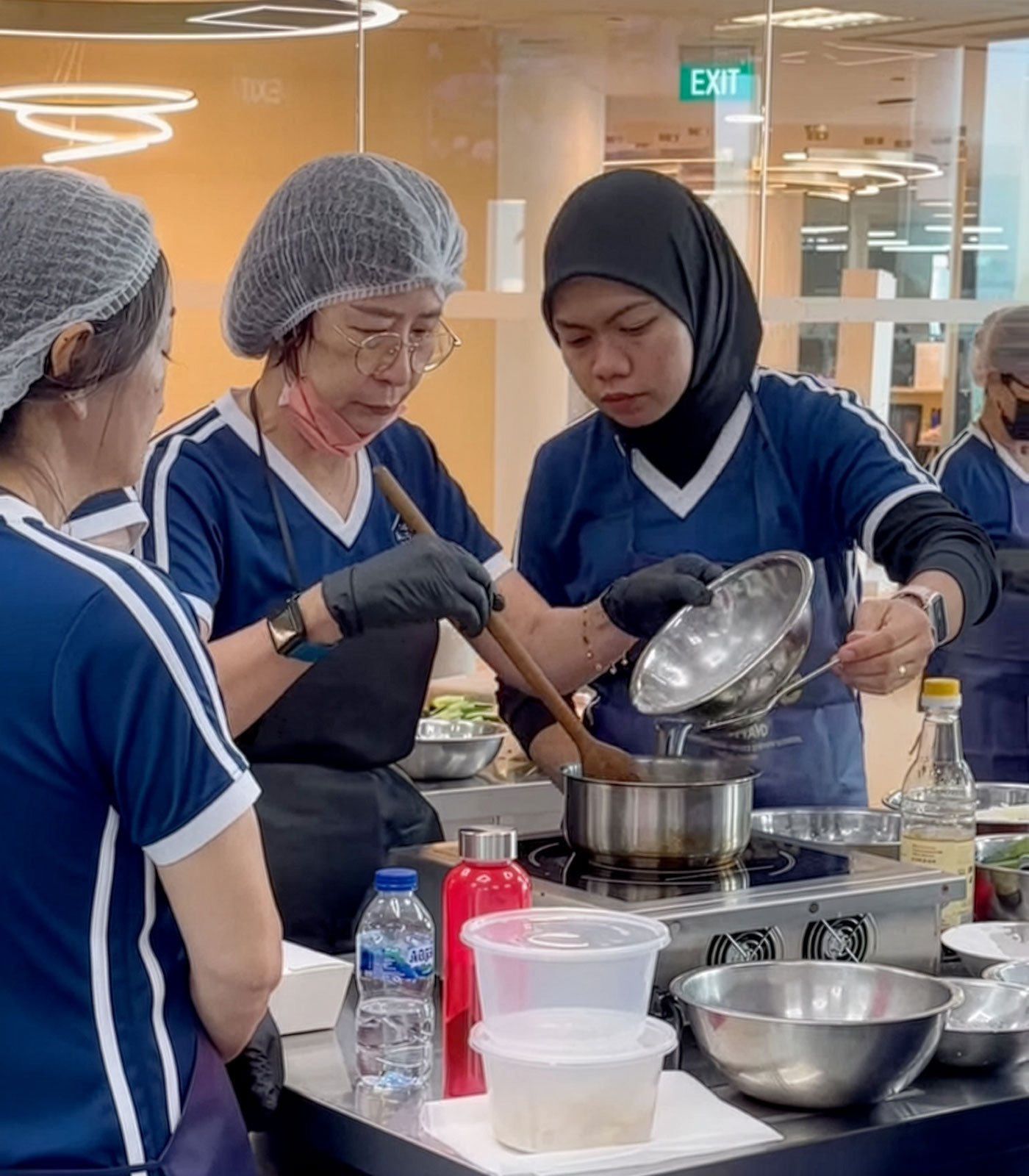
We do not rely on external mass catering. Instead, we have a dedicated team of cooks and kitchen staff who prepare food on-site before every meal. This allows us to have direct oversight of the food preparation process from start to finish, ensuring consistency and freshness of every meal.
Our kitchen teams are familiar faces to the children, often affectionately called ‘Auntie’. They understand the children’s preferences and take great pride in seeing clean bowls returned to the kitchen. This human connection ensures that every meal is made with a level of love and care that goes beyond a standard menu.
Why We Feature Local Dishes
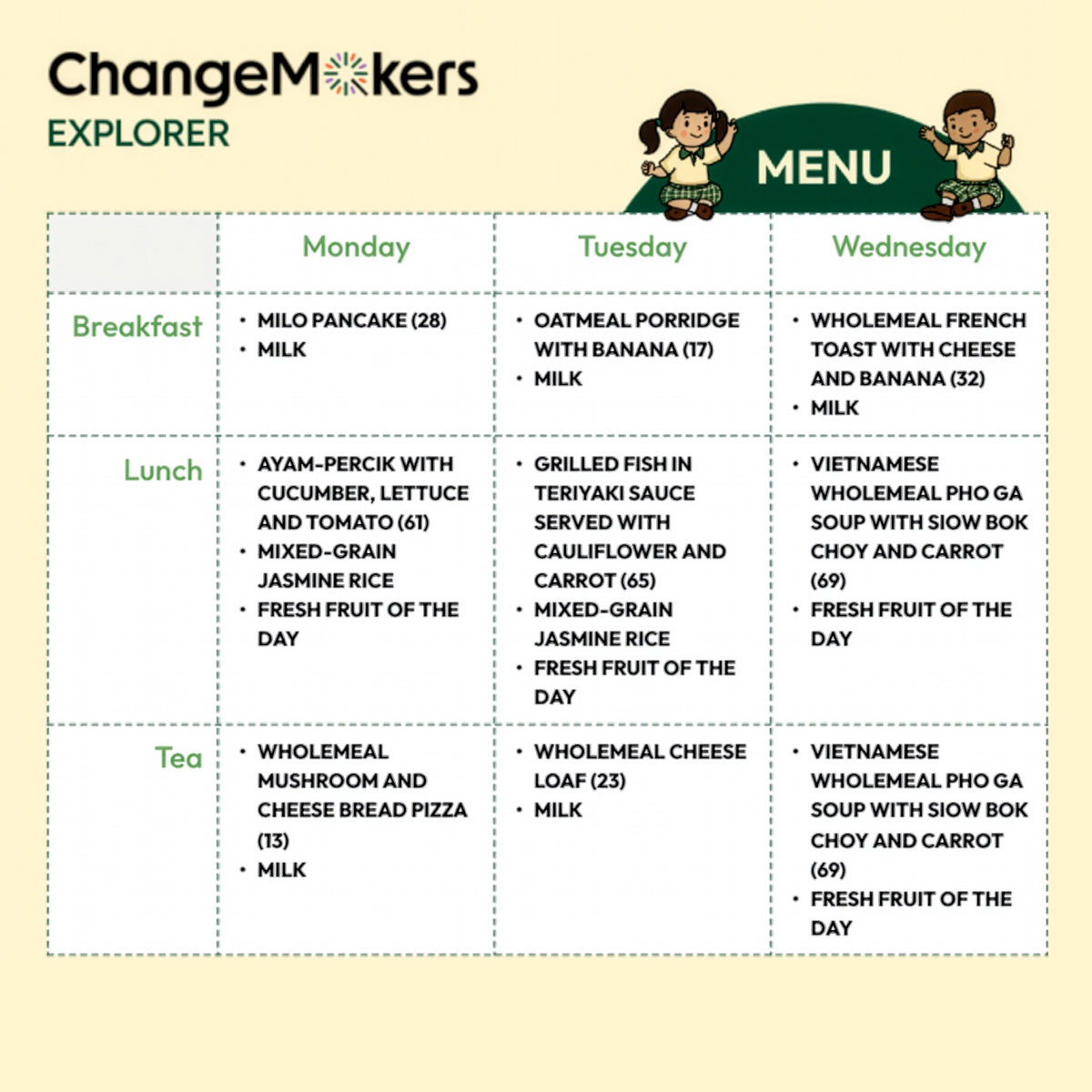
If you happen to ask a Changemakers Explorer child, ‘Have you eaten?’, do not be surprised if they excitedly tell you about the Chicken Rice or Nasi Lemak they had for lunch. Our menu features these local staples for a reason.
We chose these dishes intentionally. We know that children are more likely to eat well when they recognise the food on their plate. By serving familiar local favourites, we can introduce healthier ingredients without resistance.
For example, our Mixed-Grain Hainanese Chicken Rice keeps the fragrant taste children love but incorporates mixed grains for added fibre. It is served with steamed chicken rather than roasted, along with fresh greens like Xiao Bai Cai and a clear winter melon soup.
We also serve Ayam Percik, a beloved Malay classic. It is the perfect way to introduce children to the world of spices gently. We marinate the chicken in aromatic turmeric and lemongrass to create a rich flavour without the overwhelming heat. It is served with fresh cucumber and tomato for a refreshing crunch.
Similarly, our Brown Rice Nasi Lemak offers the comfort of coconut rice but pairs it with a baked fish fillet instead of deep-fried wings. We include long beans to ensure a balanced intake of vegetables.
These meals are not designed to be ‘fancy’. They are designed to be comforting, culturally relevant, and nutritious.
Serving Nutritional Meals
Our in-house kitchens do not just serve a cultural menu. Our meals are also packed with nutrients to help kids grow while limiting overall calorie intake. By meticulously planning our meals, we ensure that specific dietary requirements are met and that every dish offers high nutritional value.
Here is a closer look at the science on our plates:
Category
Menu Highlights
Vitamins & Nutrients
Benefits
Recommended Daily Intake*
PROTEIN
• Mixed Grain Hainanese Chicken Rice with Xiao Bai Cai • Steamed Fish with Tomato and Bak Choy • Teriyaki Glazed Fish Fillet
Vitamin B3, B6, B12, D, Omega-3
Healing & Immunity: Supports metabolism, brain function, and immune system.
50 – 120g
FRUITS & VEG
• Xiao Bai Cai, Bak Choy • Cauliflower, Carrots • Fresh Apples, Oranges, Watermelon
Vitamin A, B, and C
Vision & Skin: Vitamin A for eyes; Vitamin C for healthy skin and healing.
100 – 180g
GRAINS
• Mixed Grain Rice • Wholemeal Spaghetti • Brown Rice Vermicelli • Wholemeal Pumpkin Bun
Vitamin B2, B3, & B6
Energy & Brain: Riboflavin for energy production; B-Vitamins for nerve function.
80 – 140g
DAIRY
• Milk • Surprise Yoghurt Parfait
Calcium, Probiotics, Vitamin D
Strong Bones: Calcium & Vitamin D for absorption; Probiotics aid digestion.
200 – 300g
To achieve this balance, we focus on five key pillars:
Protein: Our lunches feature chicken and fish prepared in healthier ways such as braising, steaming, or in soups. Chicken provides Vitamin B3 and B6 for metabolism and brain function. Fish offers Omega-3, Vitamin D, and B12 for immunity, healing, and nerve health.
Dairy: We serve milk at breakfast and yoghurt at tea to provide the necessary calcium for strong bones. Our yoghurt also supplies probiotics for healthy digestion.
Fruits and Vegetables: Daily servings ensure a robust intake of Vitamins A, B, and C for vision, brain and nerve development, and healthy skin. They also provide essential fibre for digestion and serve as a healthier alternative to sugary or processed snacks.
Grains: Making up roughly 50% of our meals, our grains are mainly wholemeal. This includes wholemeal bread at breakfast, wholegrain pumpkin buns at tea, and brown rice or wholemeal spaghetti at lunch. Whole grains help regulate blood sugar and improve focus.
Variety: Our meals are appetising and diverse. We include Chinese, Malay, Japanese, Vietnamese, Italian, and Western cuisines to foster an early appreciation for different tastes, textures, and aromas.
Preparing food for growing children requires specific skills. We are proud that our menu is Health Promotion Board (HPB) compliant, but we also want it to taste good.
To achieve this, our cooks undergo annual training workshops with professional chefs. They learn techniques to tenderise meat naturally and use herbs to enhance flavour so we can reduce salt and avoid artificial additives.
This commitment to upskilling helps us maintain a high standard. It ensures that dishes like our Ayam Percik (mildly spiced with turmeric and lemongrass) are suitable for young palates while remaining authentic.
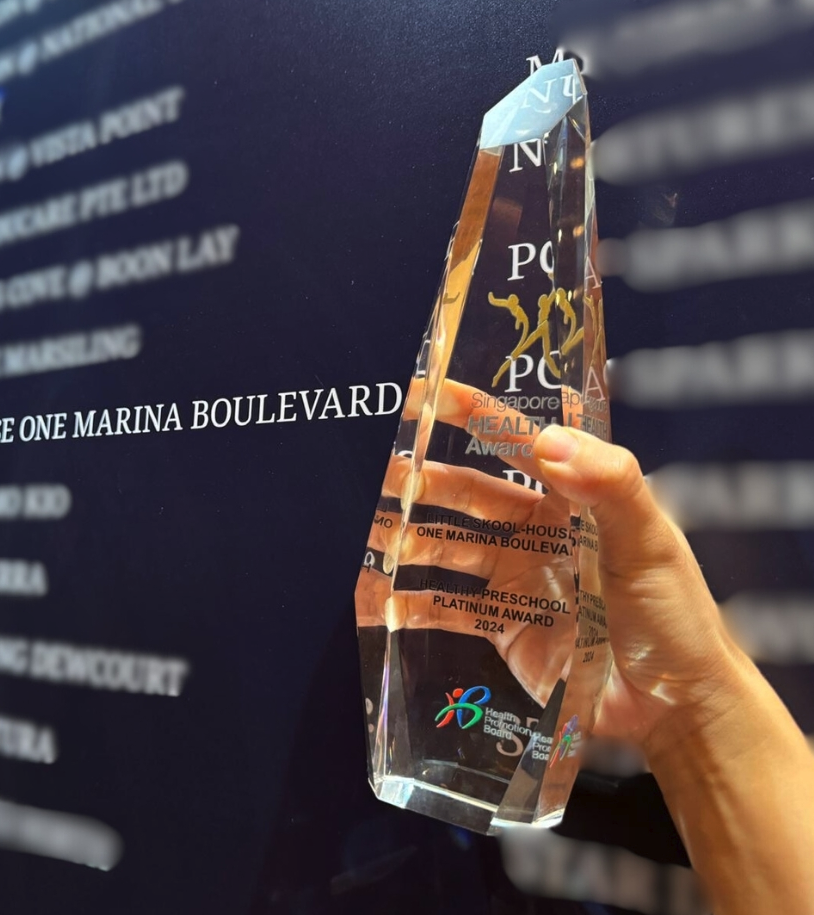
Our efforts to maintain these high standards were recently recognised when Changemakers Explorer One Marina Boulevard was awarded the Healthy Preschool (Platinum) Award at the Singapore HEALTH Award 2024. This validates our commitment to nurturing healthy habits from a young age.
More Than Just Lunch
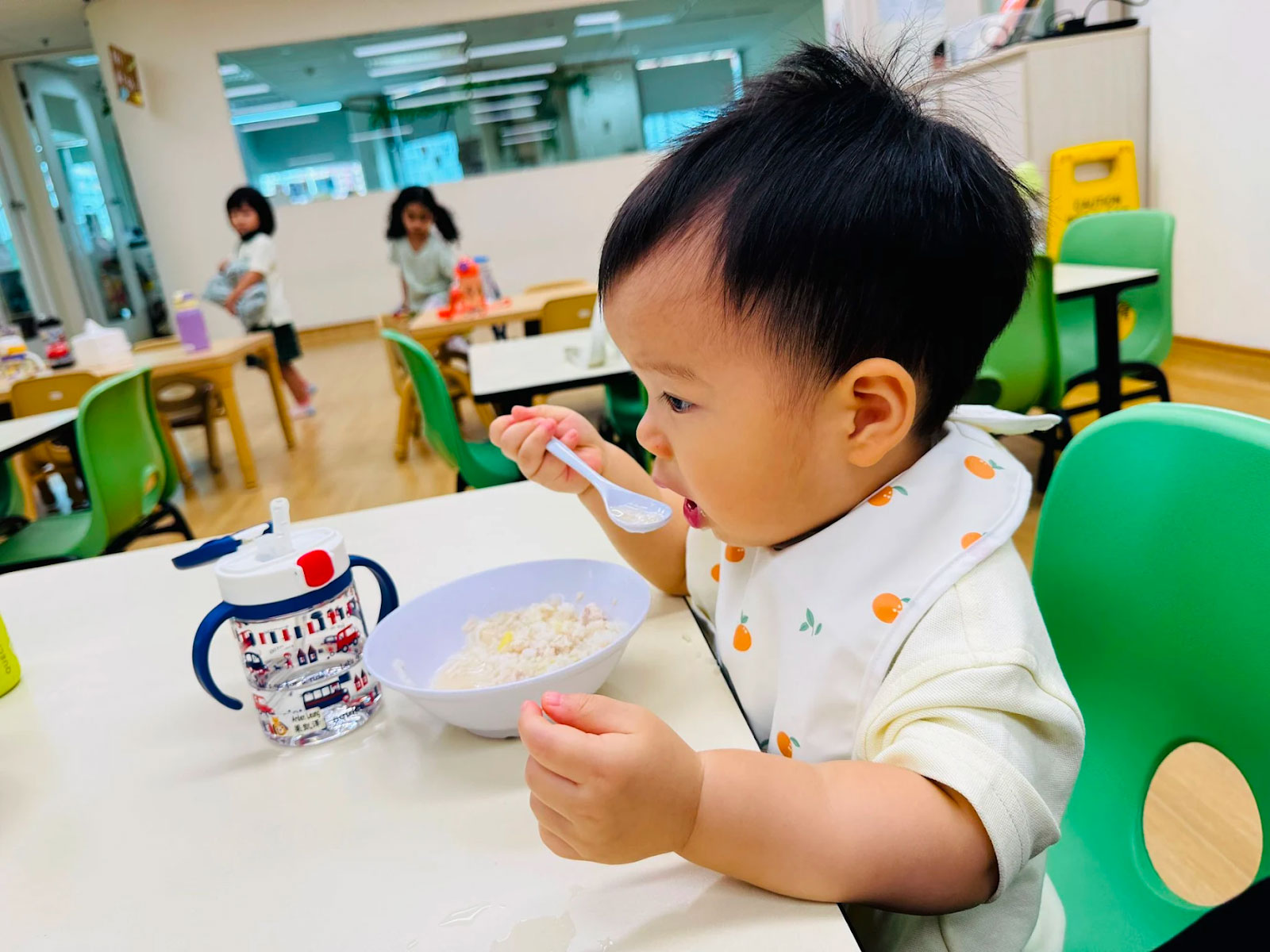
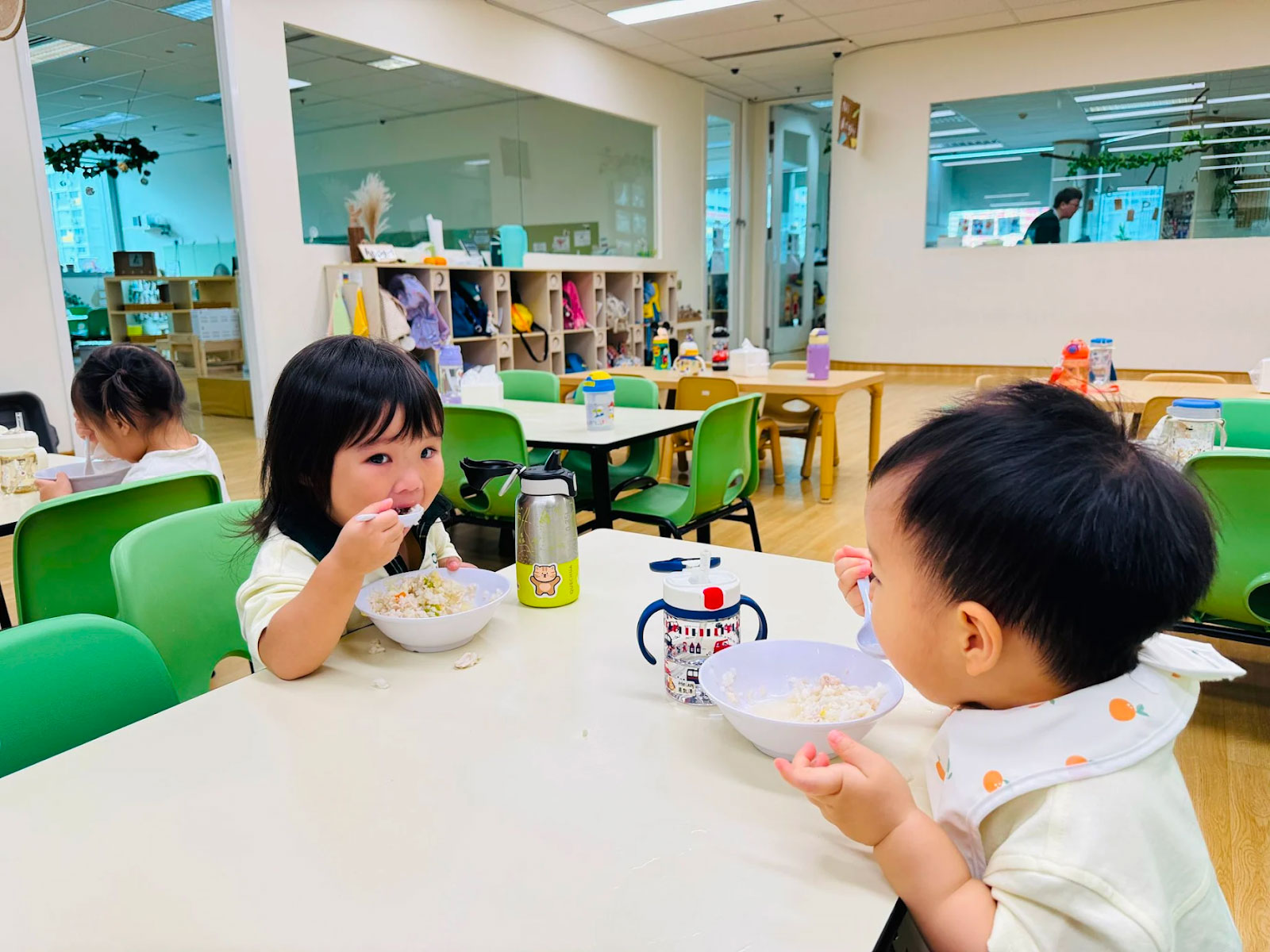
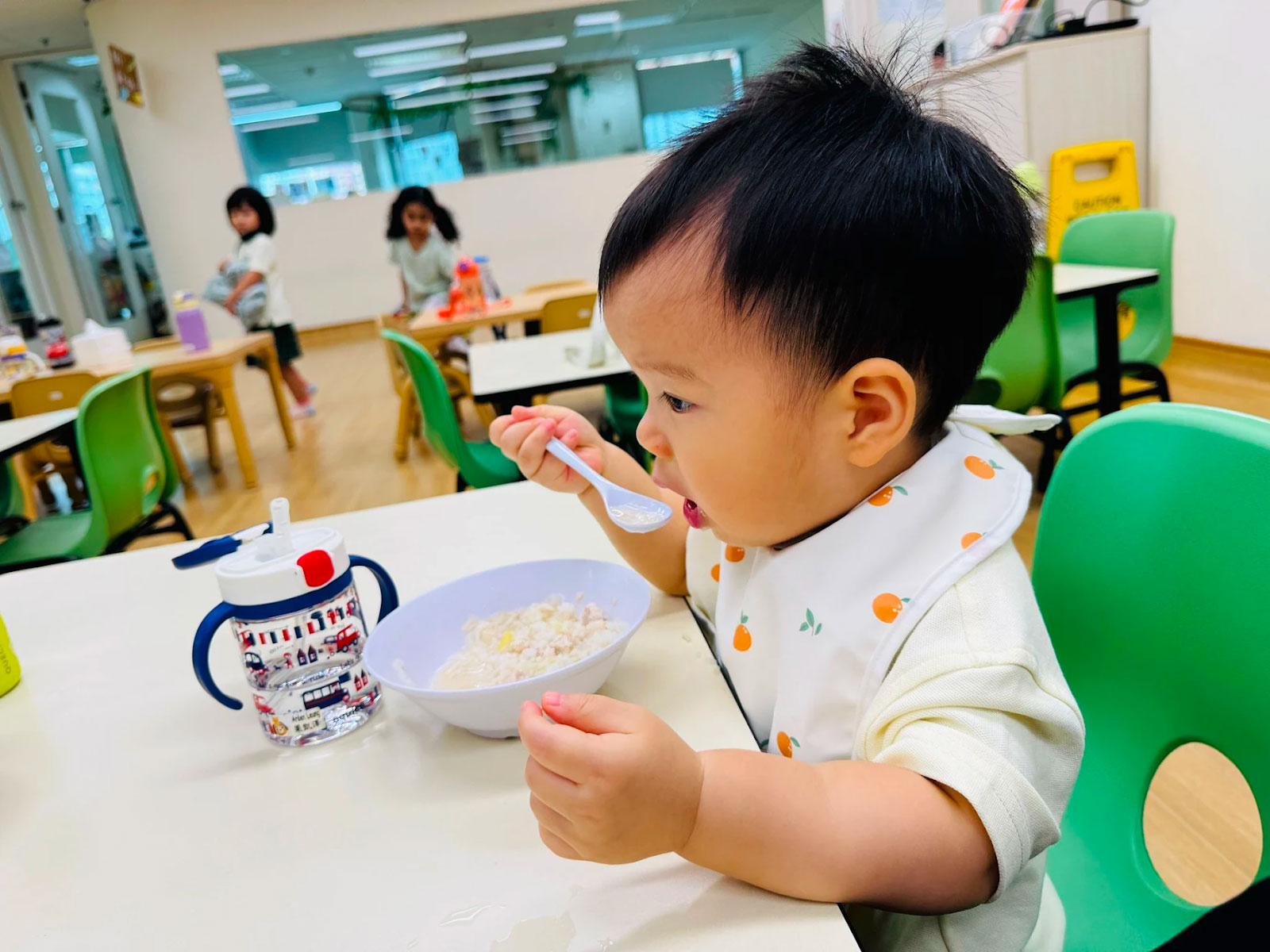
Finally, we view food as an opportunity for learning. For our toddlers, mealtime is about building independence. We introduce food transition plans with manageable portions to help them practice self-feeding.
For older children, food connects them to the wider community. At our Downtown East centre, as part of our inter-generational programme, children have worked with seniors from the Residents’ Network to harvest ingredients and prepare meals together. These activities teach patience, teamwork, and respect.
Enjoy up to $3,200* in enrolment perks!
Register by 30 September 2026 to enjoy this limited-time offer.
This website uses cookies to enhance your experience and improve our website functionalities. By continuing to use this website, you agree to our use of cookies as outlined in our privacy policy.